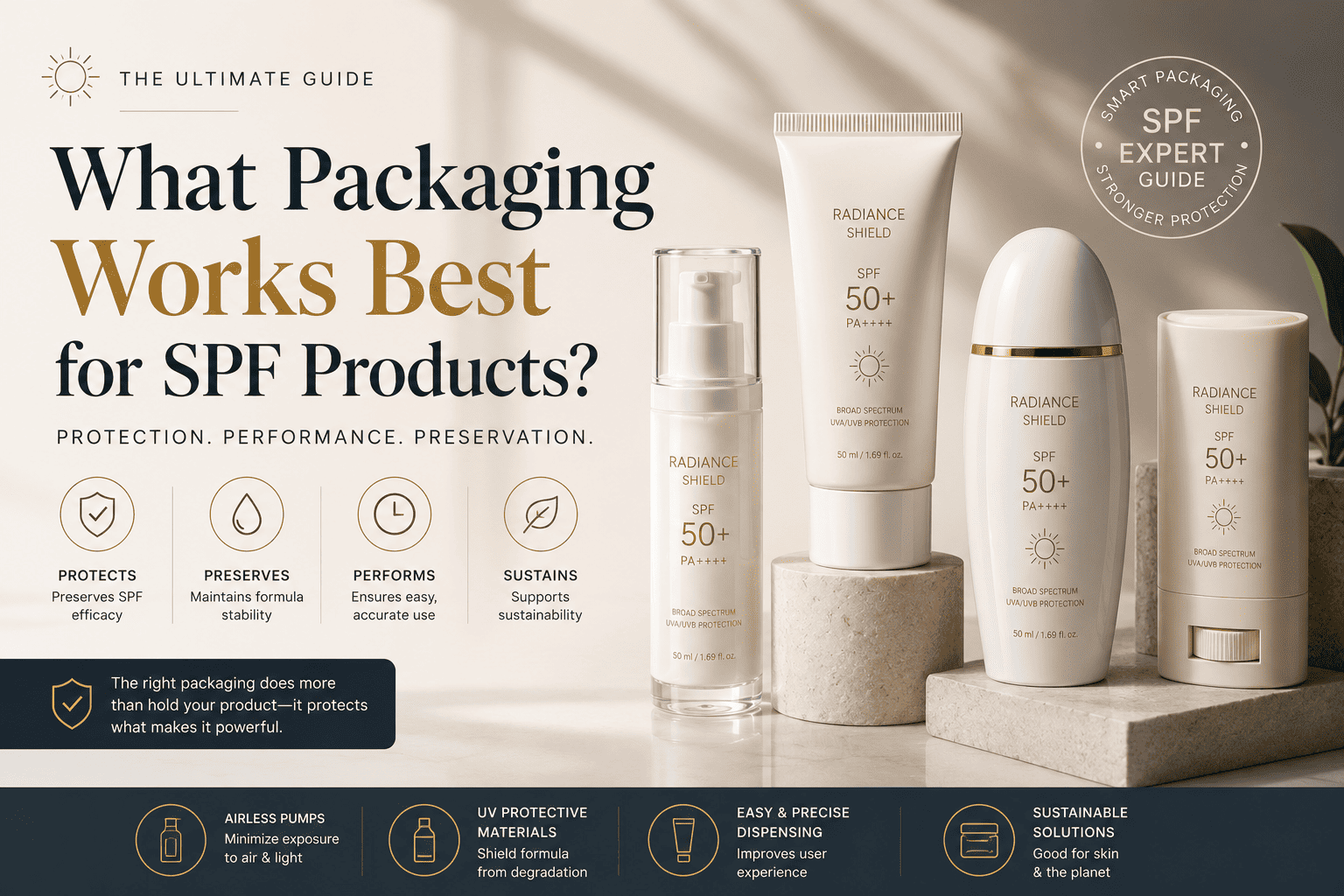
What Packaging Works Best for SPF Products?
May 27, 2026 • Mike Lee
You've perfected your SPF formula, a major investment. Now you face a critical choice: the packaging. Choosing wrong could mean your expensive active ingredients degrade on the shelf, rendering your product ineffective.
The best packaging for SPF products protects sensitive active ingredients, like Avobenzone, from degradation. This means choosing materials like opaque PE or PET, or investing in protective formats like airless pumps and aluminum tubes.
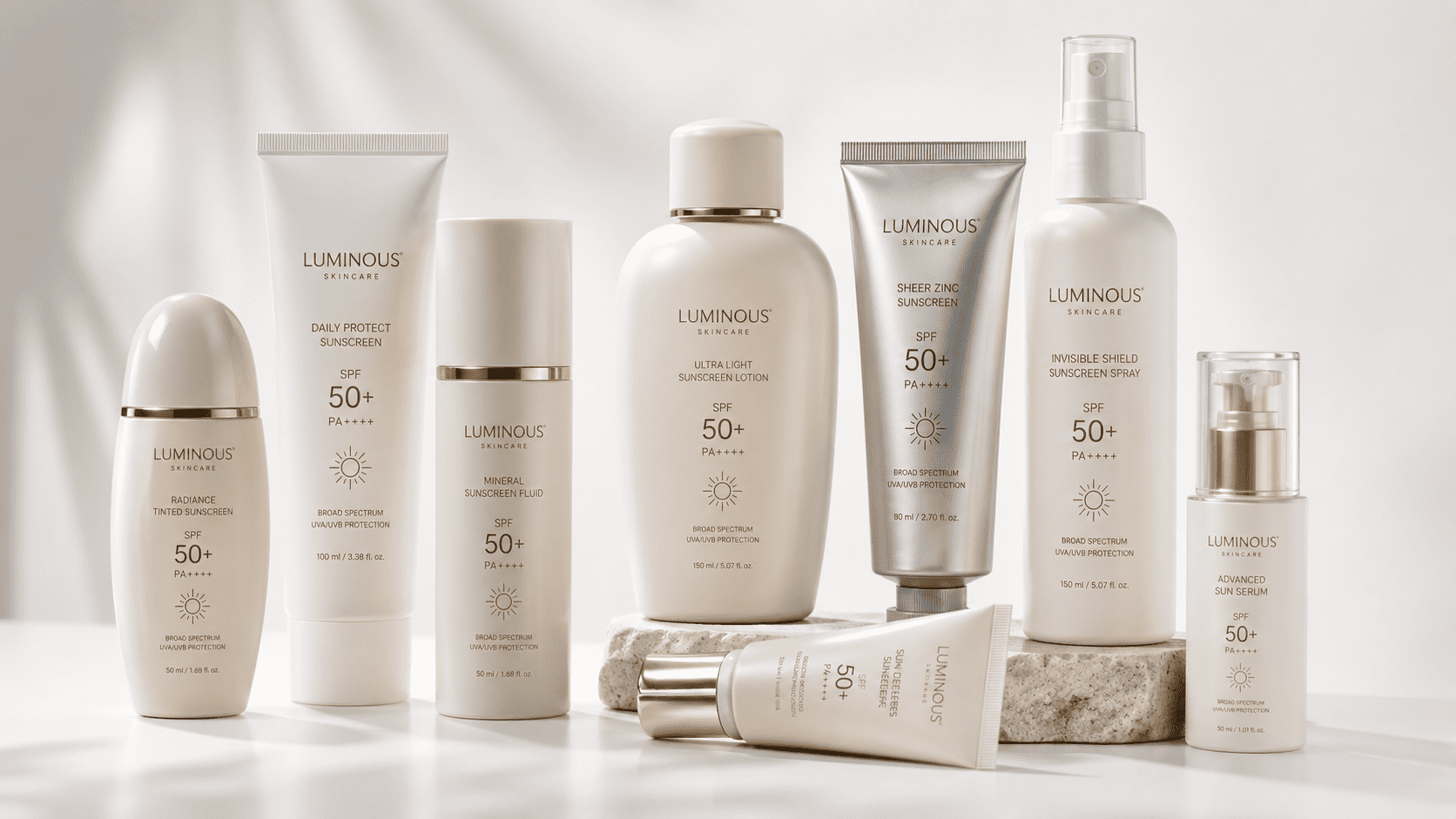
Your insight about Avobenzone is spot on and goes right to the heart of sunscreen packaging. So many brands focus only on the look and feel, but you've identified the key chemical challenge. Avobenzone is a brilliant UVA filter, but it's notoriously unstable in the presence of UV light and can react with other substances. This is a technical detail that can make or break a product. I've seen brands choose a beautiful, clear bottle only to find their product's efficacy plummeting after a few weeks on the shelf. The packaging choice must start with protecting the formula. Let's break down how to do that effectively.
How Should You Choose Your Sunscreen Product Packaging?
You're looking at tubes, bottles, and sprays, feeling overwhelmed. You're worried that choosing for looks alone might lead to a product that is difficult to use or doesn't protect the formula inside.
Choose by balancing three key factors: formula compatibility, user application, and brand positioning. The right choice is where these three areas overlap, ensuring your product is stable, convenient, and attractive.
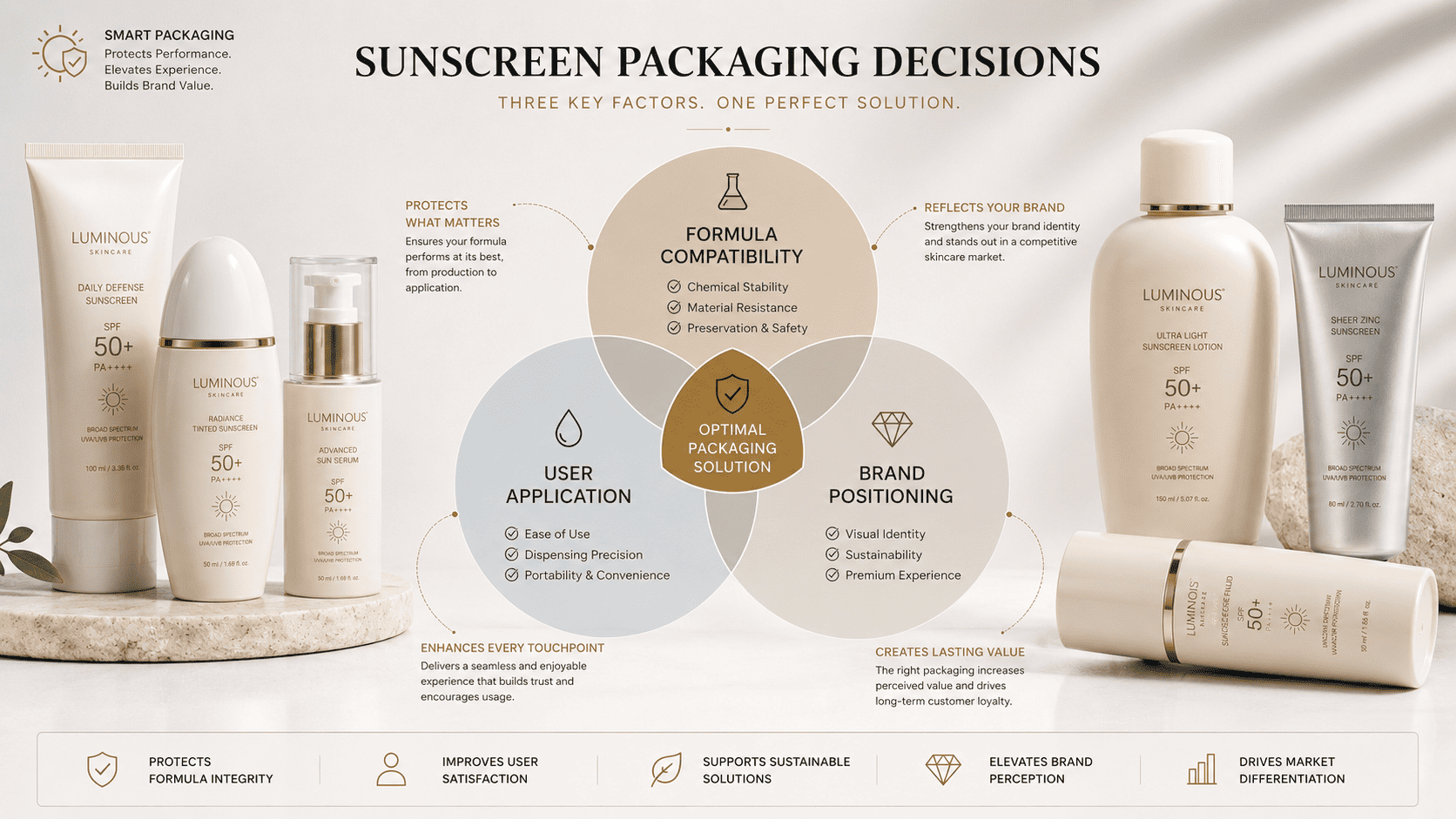
This is the strategic framework I walk every client through. First, Formula Compatibility. This is the most critical technical step. As you pointed out, active ingredients like Avobenzone need protection. This means using materials that are non-reactive and often opaque or with UV-blocking additives to prevent light degradation. We test our PE, PET, and PP materials extensively to ensure they are inert and won't cause these reactions. Second, User Application. How will your customer use this? A high-SPF facial cream demands a pump for controlled dosage. A body mist needs a fine sprayer for even coverage. A kids' product needs to be rugged and easy to handle. Third, Brand Positioning. What does your packaging say about your brand? A heavy-walled PET bottle feels luxurious, while a flexible PE tube feels practical and family-friendly. The perfect choice nails all three.
The Decision Triangle
| Factor | Question to Ask | Examples |
|---|---|---|
| Formula Compatibility | Will this package protect my active ingredients (e.g., Avobenzone)? | Use opaque PE plastic; avoid reactive materials. |
| User Application | How will my customer use this product most easily? | Lotion pump for face cream; spray for body mist. |
| Brand Positioning | What feeling does this packaging give the customer? | Heavy PET for luxury; flexible PE tube for value. |
What Are the Best Packaging Solutions for Sunscreen Products?
You're looking for a definitive answer on the "best" packaging. You want to know which options offer maximum protection and a premium experience, but every option seems to have its own pros and cons.
The "best" solutions offer the highest level of formula protection. Airless packaging is the gold standard for preventing oxidation. Opaque PE/PET bottles are versatile workhorses. Aluminum tubes provide a complete, hermetic seal.
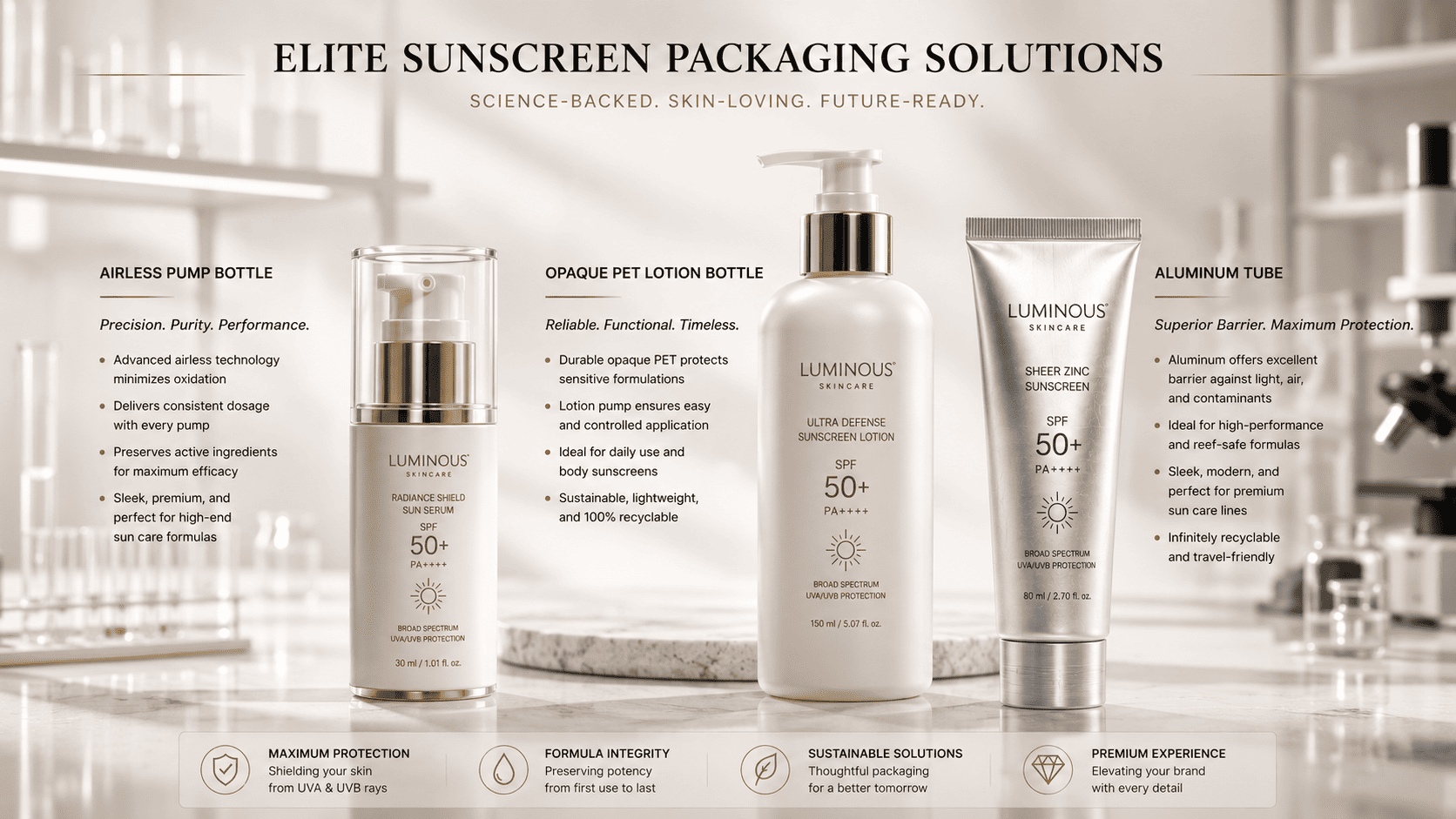
When a client like Shubihika from RAS BEAUTY asks for the "best," they're asking for zero compromises on quality. In that case, I point them to a few elite options. Airless packaging is at the top of the list. Its internal piston or collapsing bag system dispenses product without letting any air in. This is the ultimate way to protect highly sensitive ingredients like Avobenzone and antioxidants from oxidation, ensuring maximum potency. Next are high-quality, opaque PE or PET bottles. By making the plastic opaque, we completely block UV light, solving the light-degradation issue for Avobenzone. Paired with a good lotion or spray pump, this is an excellent, cost-effective, and highly customizable solution. Finally, for ultimate barrier protection, there is the aluminum tube. Like a toothpaste tube, it provides a hermetic seal against light, air, and moisture. It's a classic choice for pharmaceutical-grade products for a reason—nothing gets in or out.
What is the Ultimate Guide to Sunscreen Packaging?
You need a clear roadmap to navigate all the packaging options. You want a guide that takes you from basic tubes to advanced airless systems, helping you understand where your product fits.
The guide is a journey from basic to advanced protection. Start with classic tubes for simple formulas, move to pump bottles for better application, and graduate to airless systems for protecting high-tech, sensitive formulas.
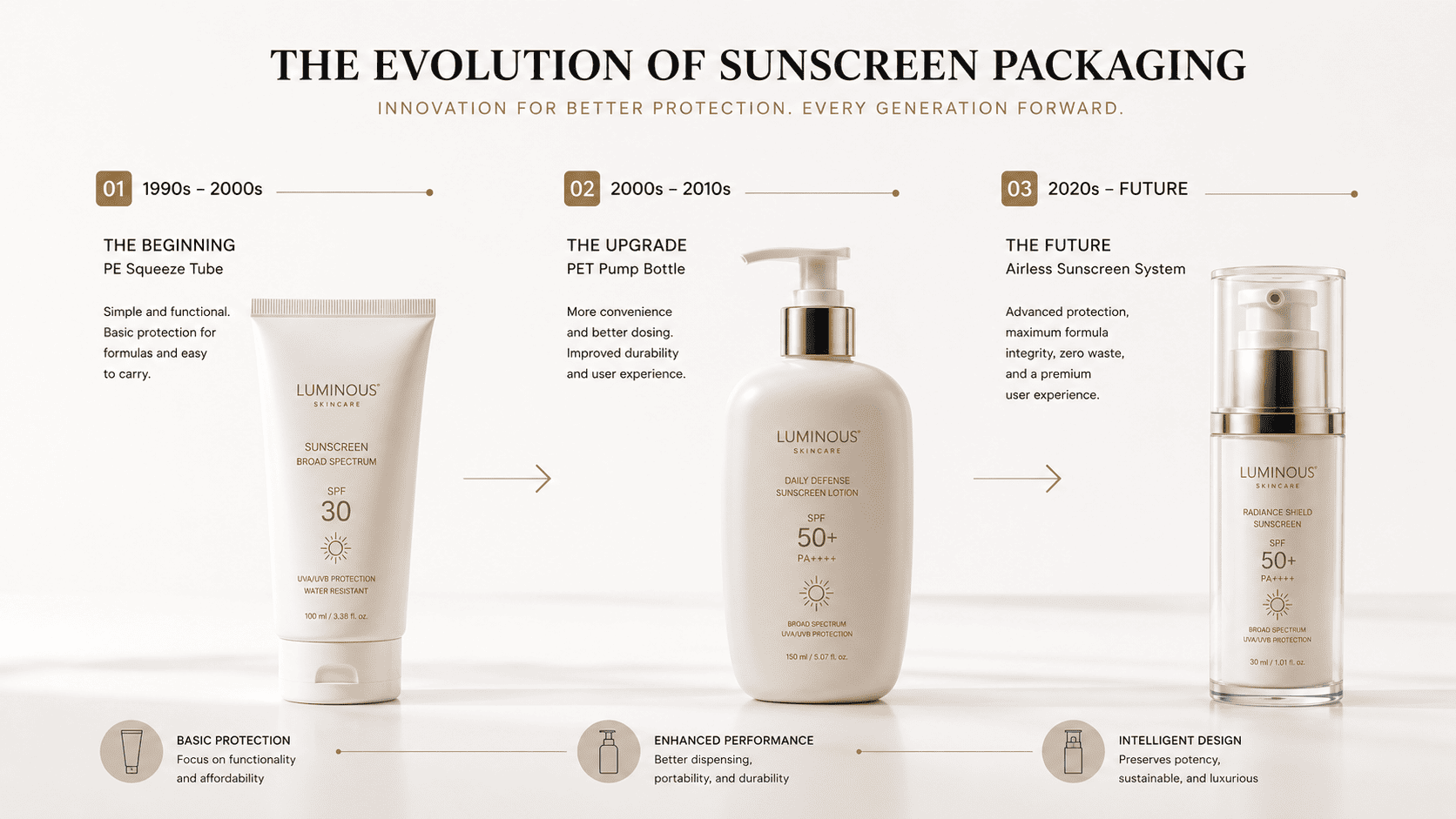
Let's walk through the options, from most common to most advanced. At the entry-level, you have the Squeeze Tube. Made from flexible PE, it's cost-effective and familiar to consumers. It’s perfect for simple, robust formulas and family-sized products. The next step up is the Bottle with a Pump or Sprayer. Using PET or PE, this format improves the user experience significantly. Lotion pumps offer clean, controlled dispensing for creams, while sprayers provide even coverage for liquids. This is the most versatile category, where design and branding really start to shine. At the highest level, you have Airless Bottles and Aluminum Tubes. These are for brands who want to offer the absolute best protection for their advanced, high-value formulas. Choosing an airless system tells your customer that you have invested heavily in protecting the high-performance ingredients inside. The right choice depends on your formula's sensitivity, your budget, and the story you want to tell.
Conclusion
Choosing the best SPF packaging means starting with your formula's chemistry, especially key ingredients like Avobenzone. Protect the formula first, then design for your user and your brand identity.
Written by

Mike Lee
You may also be interested in:
How Do You Test Sunscreen Packaging for Compatibility and Stability?
You've finally approved your perfect sunscreen formula. Now you need to package it, but a
Why Do Premium Sunscreen Brands Invest in Custom Packaging?
You've poured your heart and soul into creating a superior sunscreen formula. Yet, you're considering
Sunscreen Packaging Guide: Materials, Pumps, and Design Explained
You're ready to launch your sunscreen, but the packaging options are overwhelming. You're trying to
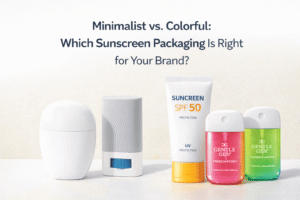
Minimalist vs. Colorful: Which Sunscreen Packaging Is Right for Your Brand?
Your sunscreen formula is perfect, but it's invisible on the shelf. You see minimalist and