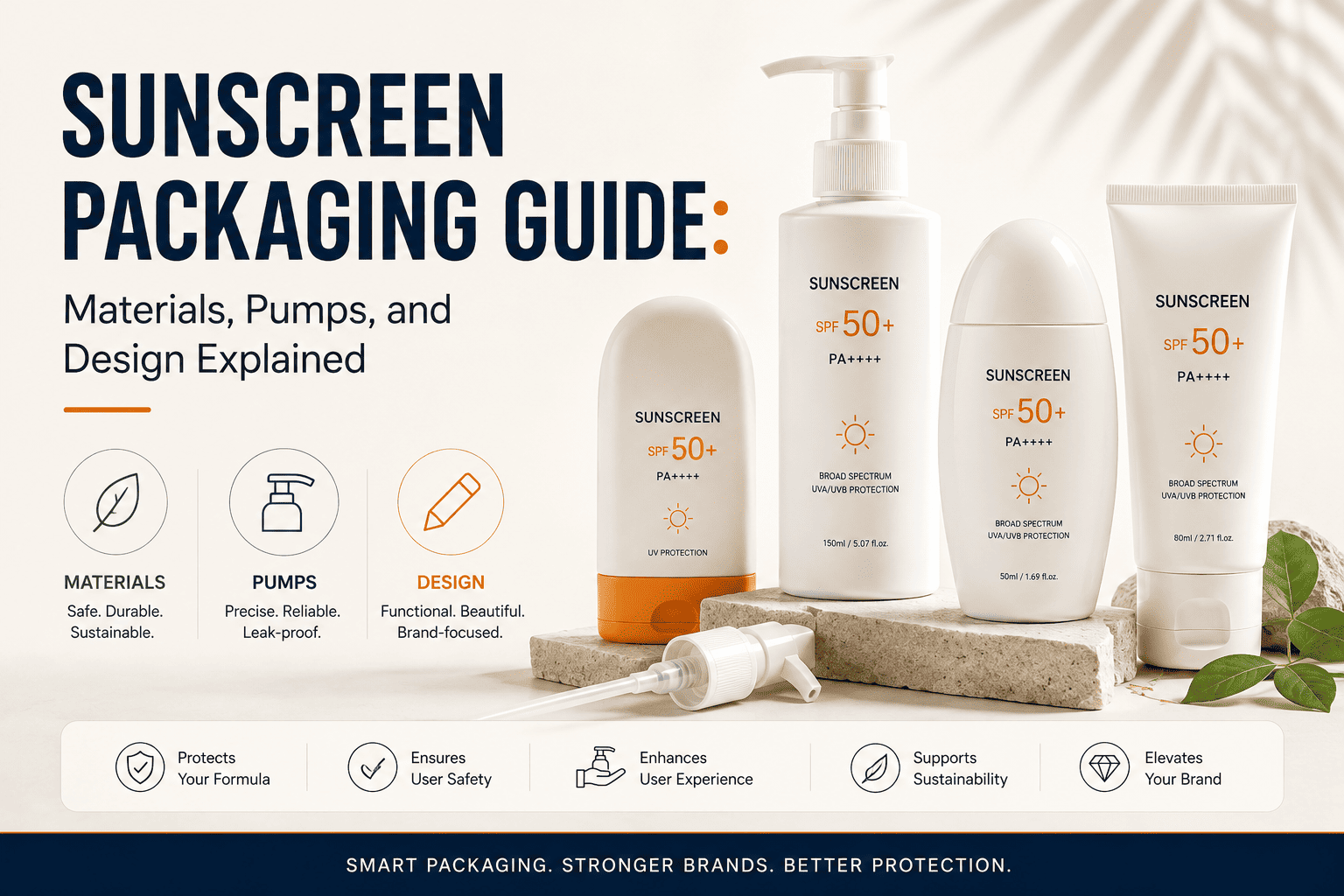
Sunscreen Packaging Guide: Materials, Pumps, and Design Explained
May 12, 2026 • Mike Lee
You're ready to launch your sunscreen, but the packaging options are overwhelming. You're trying to choose between materials, formats, and pumps, worried that a wrong decision could hurt your brand's image or product performance.
The key is to select components that match your brand identity and price point. Choose a material for feel and compatibility, a format for user convenience, and a dispenser for the right application experience.
I see this uncertainty with brand managers all the time. They get caught up in the technical details, trying to decide between PE and PET plastic as if there's one "perfect" answer for everyone. The truth is, while the technical choices are important, they are just the building blocks. The real magic, as your insight points out, happens in the design. I always tell my clients, "Let's first define your customer and your brand. Is this a luxury facial product or a fun, family beach product?" The answer to that question tells us which materials and pumps to use, and it opens the door for a novel design that will truly stand out. Let's walk through those building blocks so you can make informed decisions.
Which Material is Best for Your Sunscreen Bottle?
You have a fantastic formula, but you're afraid the wrong plastic could cause leaks or feel cheap. You need to choose a material that protects the product and feels good in the customer's hand.
The material you choose depends on your formula's chemistry and your brand's desired feel. PE is flexible and ideal for squeeze tubes, while PET offers a rigid, glass-like premium feel for lotions and sprays.
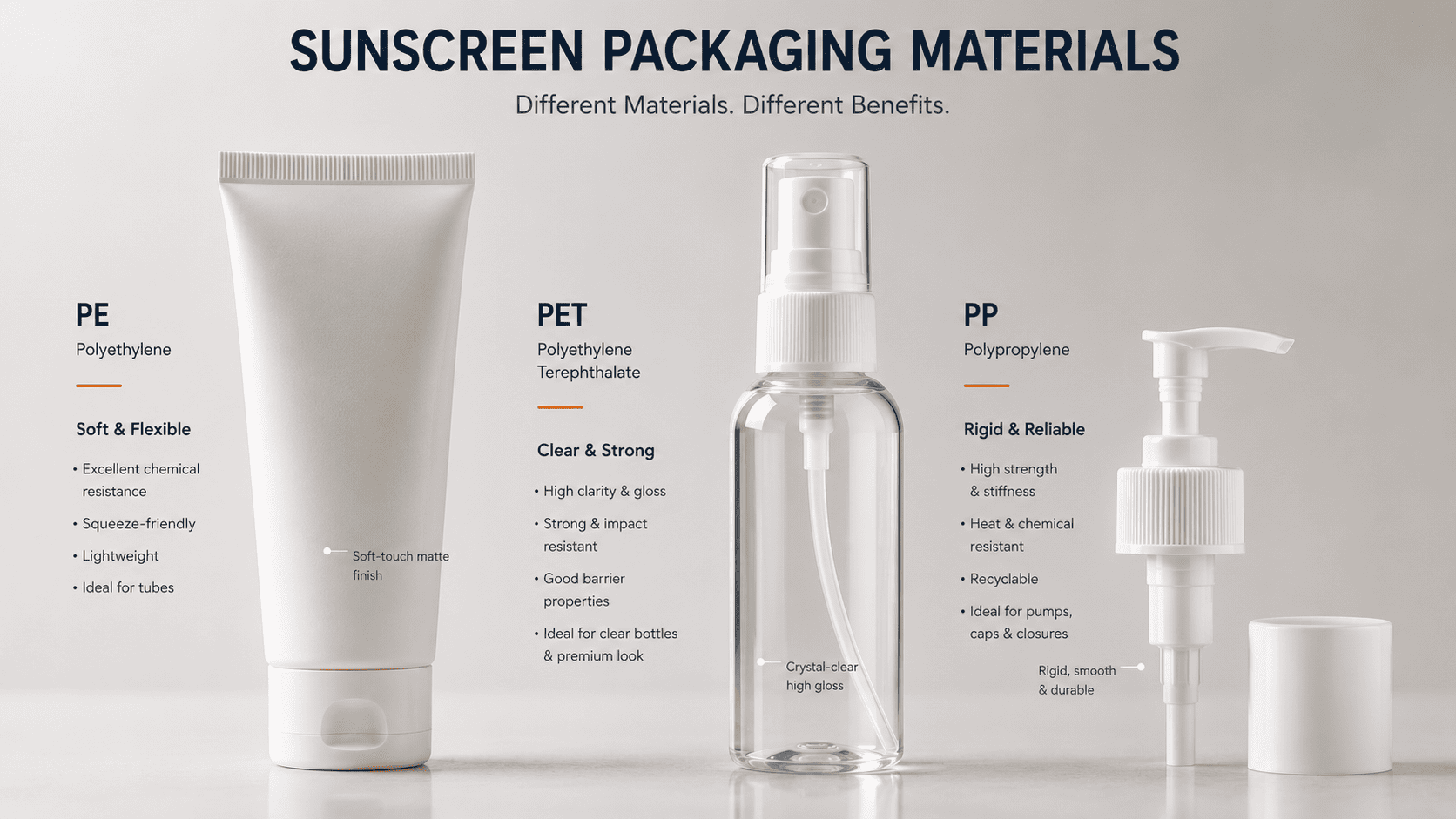
This is always the first technical conversation we have. The choice between materials is about balancing performance, aesthetics, and cost. For most classic sunscreens, PE (Polyethylene) is the go-to choice. It's soft, durable, and perfect for the squeezable tubes we all know. It's cost-effective and provides a great canvas for printing. However, if you are positioning your product as a high-end, luxury facial serum with SPF, you might want the crystal clarity and rigid feel of PET (Polyethylene Terephthalate). It can be molded to look almost like glass, which instantly communicates a premium quality. Then there is PP (Polypropylene), a harder, more heat-resistant plastic that we use for most caps, closures, and the intricate internal parts of pumps. Each material has its place, and the right partner will guide you to the perfect choice for your specific product.
Material Selection at a Glance
| Material | Primary Use | Feel & Appearance | Best For |
|---|---|---|---|
| PE | Squeeze Tubes, Standard Bottles | Soft, flexible, opaque or translucent | Mass-market, family, and sports sunscreens |
| PET | Lotion Bottles, Spray Bottles | Rigid, high-clarity, can look like glass | Premium skincare, luxury facial sunscreens |
| PP | Caps, Jars, Airless Pump Components | Hard, rigid, excellent chemical resistance | Components requiring structural integrity |
Beyond Tubes: Which Packaging Format Fits Your Brand?
You know tubes are the standard for sunscreen, but you're wondering if another format could better serve your customers. You want a package that is both functional and aligned with your brand's unique identity.
The format should match your customer's lifestyle. Tubes are classics for a reason, but airless bottles protect sensitive formulas, and sticks offer no-mess, on-the-go application for targeted areas.
Different sunscreen packaging formats including squeeze tube, airless pump bottle, and sunscreen stick in real-life usage scenarios
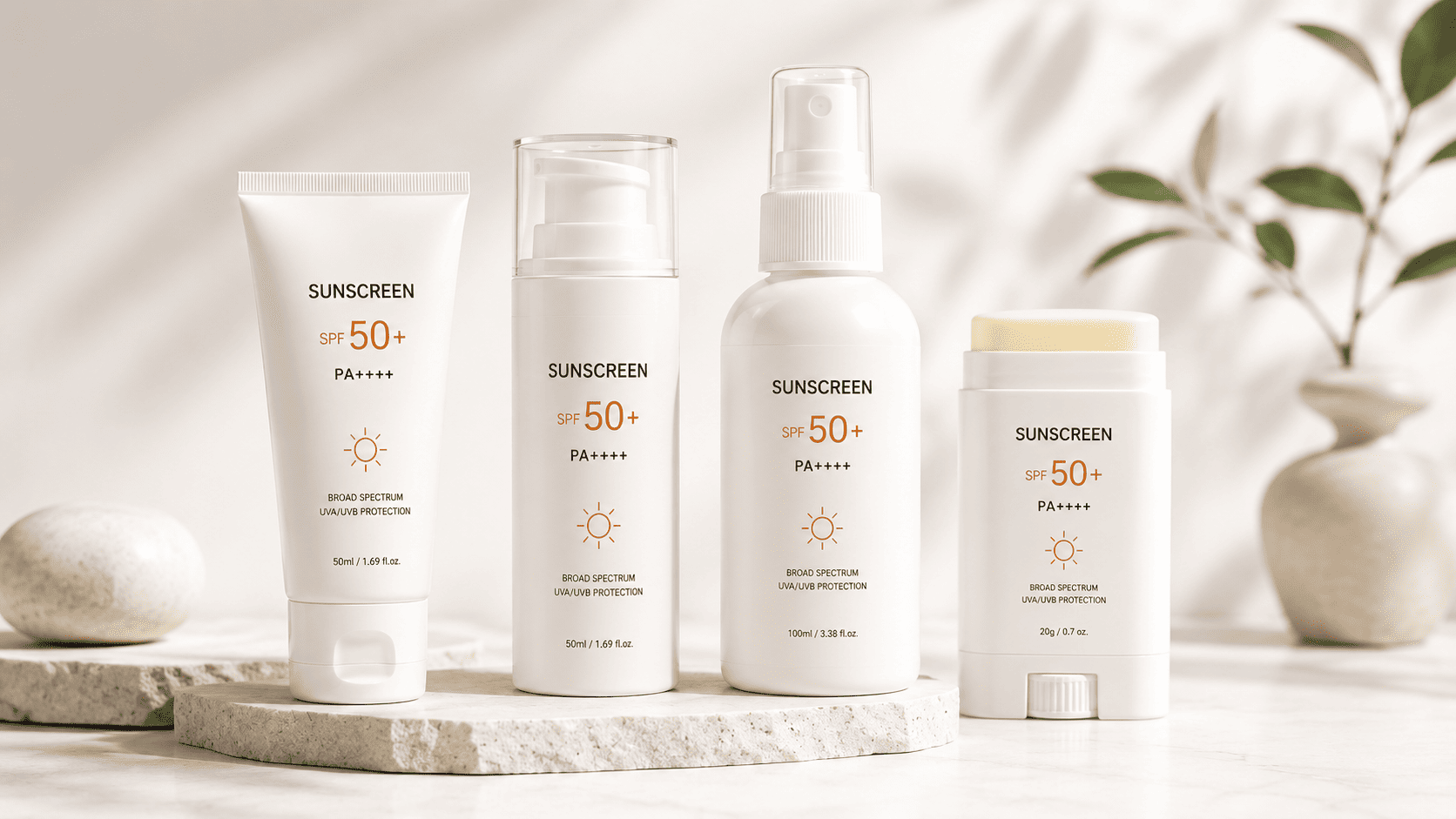
The classic squeeze tube is a fantastic, cost-effective solution that works. But your brand might need something different to stand out. Let's think about the user. For high-SPF, antioxidant-rich formulas, an airless bottle is a superior choice. Its pump system prevents air from entering, protecting the sensitive ingredients from oxidation and prolonging shelf life. This format screams "high-tech skincare." For the active, on-the-go customer, a solid sunscreen stick is perfect. It's TSA-friendly, easy to apply to the face without getting your hands messy, and great for kids. Then you have bottles with spray or lotion pumps, which are perfect for body application. As a brand manager, you should ask: "Where and how will my customer use this product?" The answer will point you to the perfect format.
Which Pump is Right for Your Sunscreen?
Your sunscreen is a lotion, but should it be in a spray or a pump? You're worried about the user experience—a bad pump can make a great product frustrating to use.
The choice is simple: use a lotion pump for controlled dispensing of thick creams and a spray pump for a fine, even mist of lighter formulas. The key is ensuring the pump engine is matched to your formula's viscosity.
Lotion pump dispensing sunscreen cream next to fine mist spray pump for sunscreen application
This is less about design and more about pure mechanics. There are really only two main options for sunscreen, and the choice depends entirely on your formula. A lotion pump is designed for thicker creams and lotions. It dispenses a controlled, specific amount with each pump, which is great for facial products where dosage matters. We can customize the output per pump (e.g., 0.5ml, 1ml) to fit your product's intended use. A spray pump, on the other hand, is for thin, liquid formulas. Its purpose is to atomize the liquid into a fine mist for broad and even coverage, ideal for body sunscreens. The single most important factor here, which we manage for our clients, is testing. We ensure the pump's engine and dipping tube are perfectly matched to your formula's thickness, or "viscosity," to guarantee a smooth, reliable user experience every single time.
Conclusion
Materials, formats, and pumps are the essential building blocks of your sunscreen packaging. Understanding them allows you to work with a partner to create a design that is truly unique and effective.
Written by

Mike Lee
You may also be interested in:
Minimalist vs. Colorful: Which Sunscreen Packaging Is Right for Your Brand?
Your sunscreen formula is perfect, but it's invisible on the shelf. You see minimalist and
How Does Packaging Design Really Influence Sunscreen Sales?
You've invested heavily in a superior sunscreen formula, but on a crowded shelf, it gets
Fine Mist Sprayer vs Treatment Pump: Which Works Better for Viscous Formulas?
You've spent months perfecting a new, thicker serum or toner. Now you're stuck. A fine
Why Is Sunscreen Packaging More Challenging Than Skincare Packaging?
You have a great serum in a beautiful bottle and a moisturizer in a premium