

Fine Mist Sprayer vs Treatment Pump: Which Works Better for Viscous Formulas?
March 31, 2026 • Mike Lee
You've spent months perfecting a new, thicker serum or toner. Now you're stuck. A fine mist sprayer seems elegant, but you're terrified it will clog, leaving customers with a broken, useless product.
For viscous (thick) formulas, a treatment pump is almost always the better choice. It dispenses a controlled dose without clogging, while a fine mist sprayer is designed for water-thin liquids and will fail with thicker products.
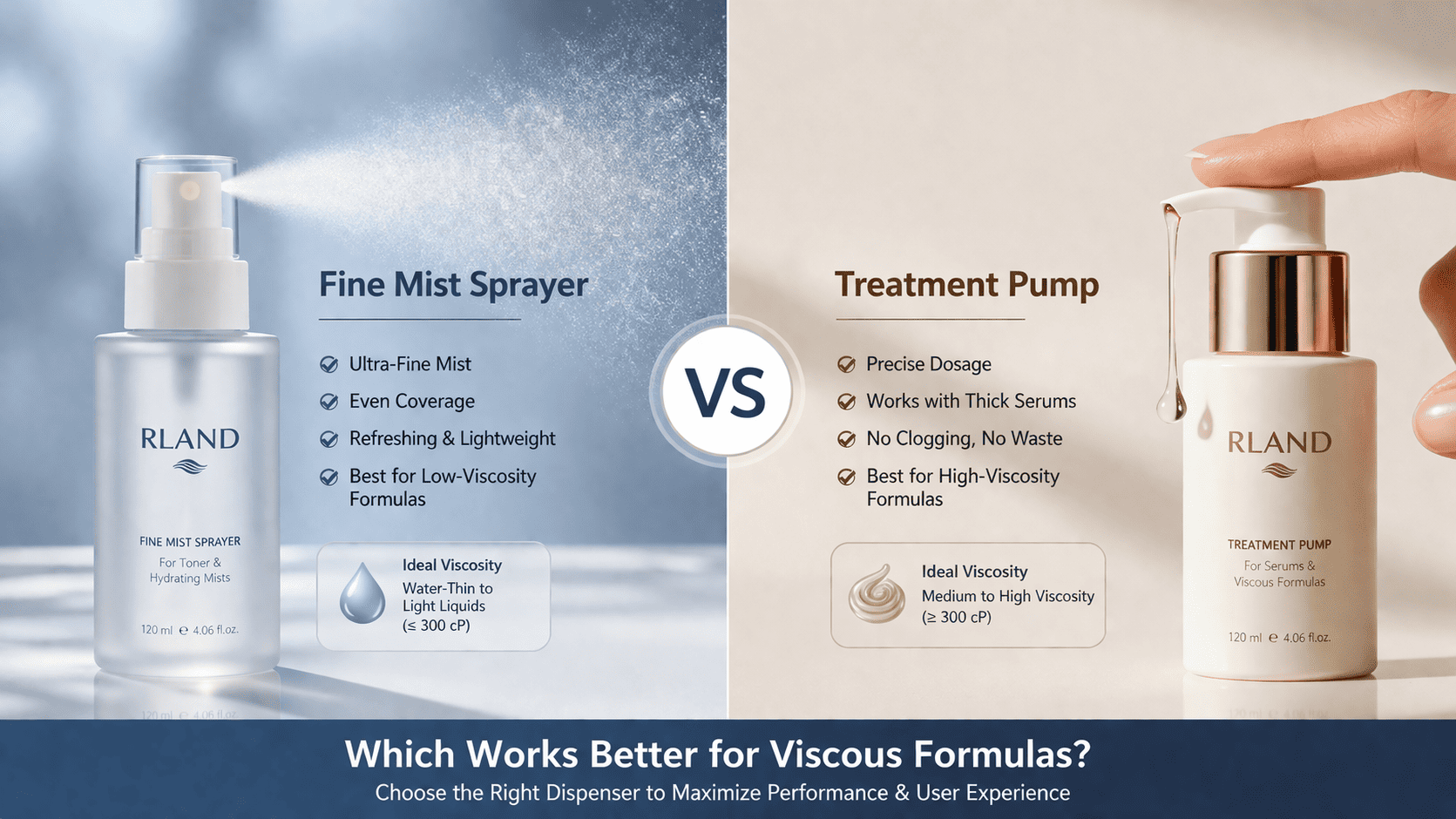
This is one of the most common technical questions I get, and it’s a critical one. I remember a client, let's call her Sani, who was developing a new plant-based hydrating essence. It had a beautiful, slightly thick texture. She was convinced that a "fine mist" was the most luxurious way to apply it. We had to do a quick demo in our lab, showing her how the formula instantly clogged a standard mist sprayer but came out perfectly with a treatment pump. That five-minute test saved her from thousands of customer complaints. The choice of closure isn't just about looks; it's about making sure your formula works perfectly from the first use to the last.
So, How Does a Fine Mist Sprayer Actually Create Mist?
You love that cloud-like, refreshing feeling of a face mist, but you've never really thought about the mechanics. How does it turn liquid into a delicate spray without just squirting?
A fine mist sprayer uses a tiny engine to force liquid through a special nozzle, atomizing it into thousands of micro-droplets. This process only works with low-viscosity, water-like liquids that can pass through the narrow channels.
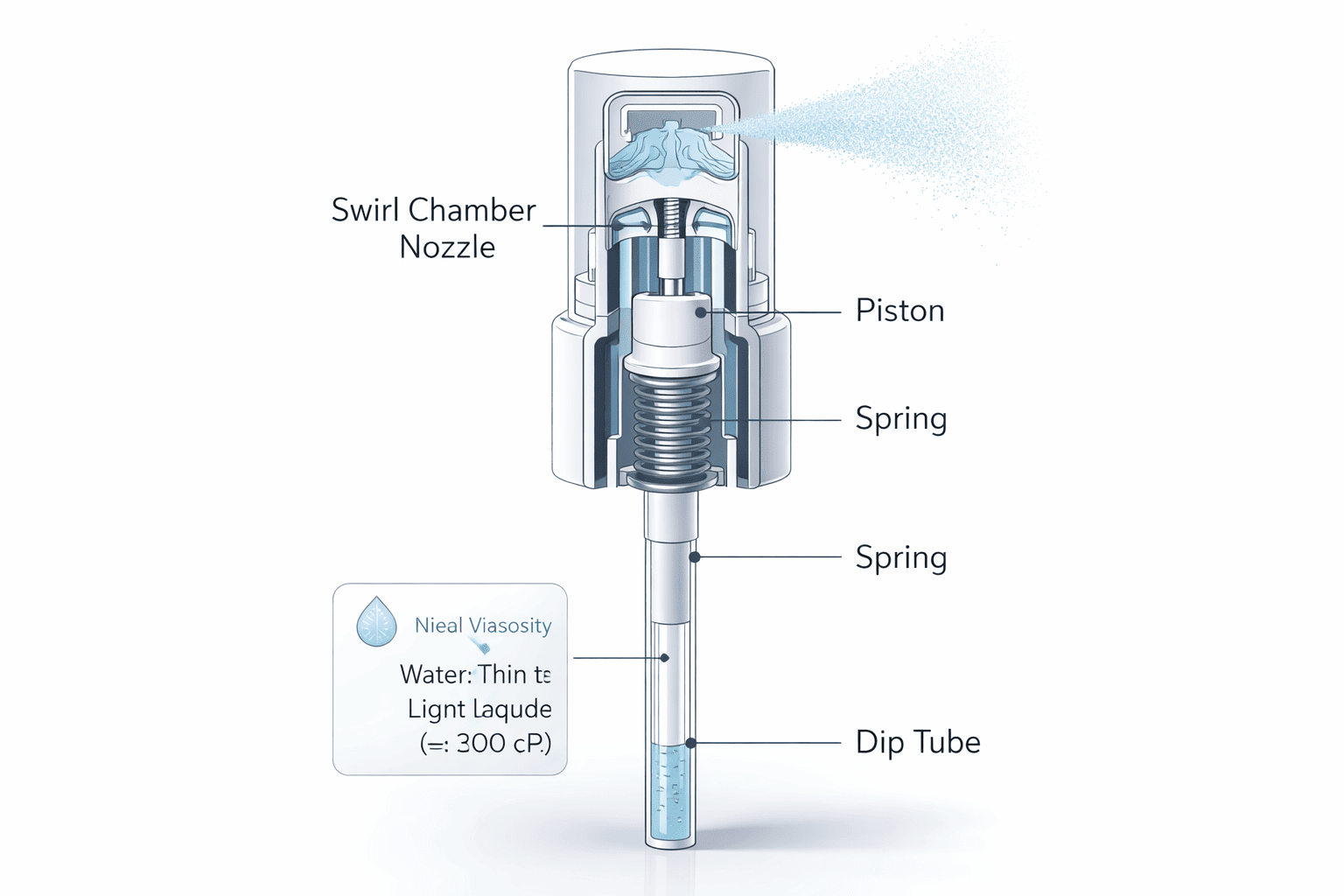
Think of a fine mist sprayer as a tiny, high-precision engine. When you press the actuator, a piston moves down, compressing a spring and forcing the liquid in the chamber upwards. The magic happens in the nozzle. The liquid is forced through a "swirl chamber," a tiny component designed to make the liquid spin rapidly before it exits through a pinhole-sized opening, called an orifice. This combination of pressure and spinning motion breaks the liquid apart—or atomizes it—into a fine, airborne mist. But here is the critical part: this entire system is built with extremely narrow channels. If your formula is even slightly viscous, like a gel or serum, it's too thick to travel through these channels and will clog the nozzle orifice instantly. This results in sputtering, streaming, or complete failure.
Fine Mist Sprayer Components
| Component | Function | Why Viscosity Matters |
|---|---|---|
| Dip Tube | Sucks liquid from the bottom of the bottle. | Thick liquids can be hard to draw up the tube. |
| Piston/Spring | Creates the pressure to force the liquid up. | Provides the force, but can't overcome a clog. |
| Swirl Chamber | Spins the liquid to help it break apart. | Thick liquids won't spin properly. |
| Nozzle Orifice | The final, tiny exit point that creates the mist. | This is the most common failure point. It clogs easily. |
Then What Makes a Treatment Pump Different?
You've seen treatment pumps on serums, lotions, and foundations. They look similar to sprayers, but the experience is completely different. What exactly is happening inside that makes them suitable for thicker products?
A treatment pump is not a sprayer; it's a dispenser. It is engineered with a larger engine and wider channels to dispense a precise, controlled dose of a thicker liquid without atomizing it.
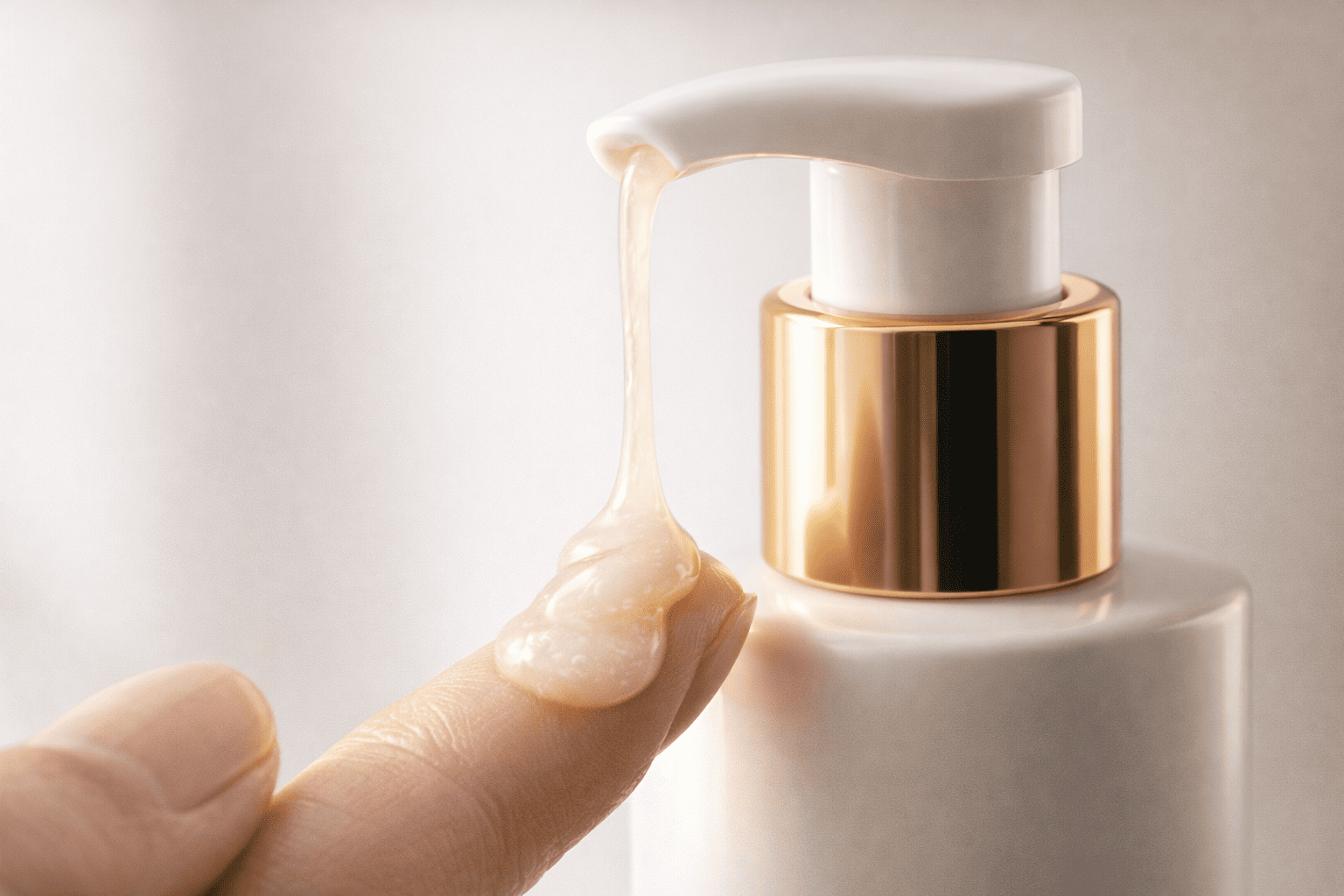
A treatment pump shares some parts with a sprayer, like a piston and dip tube, but its purpose and design are fundamentally different. Its job is not to create a mist, but to move a specific amount of liquid from the bottle to your hand. First, all its internal channels are significantly wider. This allows thicker formulas, like serums, oils, liquid foundations, and lotions, to flow through without blocking the mechanism. Second, the nozzle is completely different. Instead of a tiny orifice designed for atomization, it has a simple, wider opening. When you press the actuator, the pump dispenses the product in a single, controlled stream or dollop. This is why we call it a "pump" and not a "spray." It provides an accurate dose, ensuring the user gets the right amount of your valuable formula every time while preventing the messy clogs and failures associated with trying to spray a viscous product.
So, a Mist Bottle is Just a Bottle with a Sprayer?
You hear the terms "mist bottle" and "spray bottle" used all the time. Is there really a difference, or is it just marketing language? Does the bottle itself play a role?
Essentially, yes. The key difference is the closure. A "mist bottle" implies it has a fine mist sprayer for atomizing watery liquids. A "spray bottle" is a general term that could have any type of sprayer, including a treatment pump.
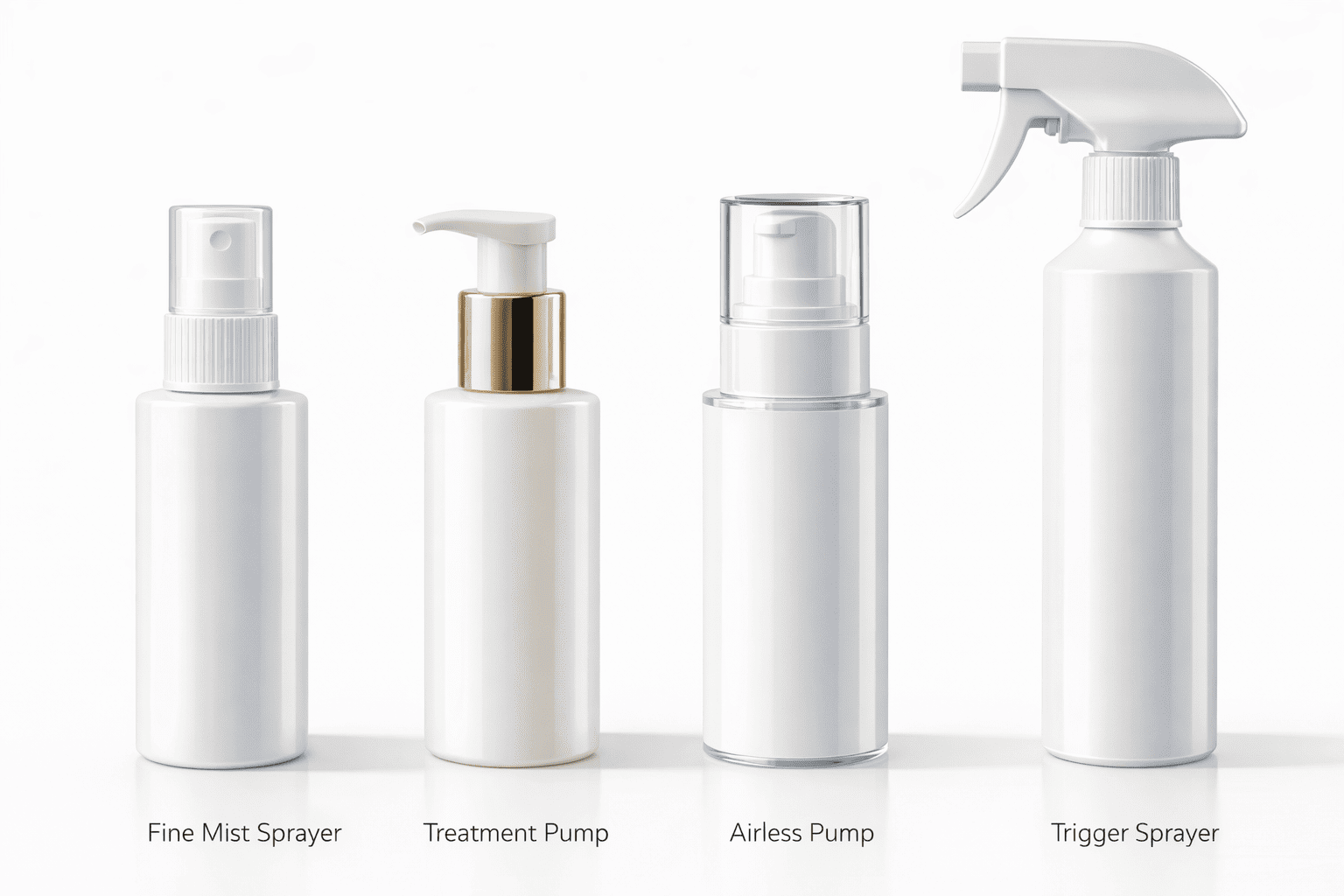
While the terms are often used interchangeably, in the packaging industry, we are more precise. The bottle itself—whether it's made of PET, glass, or PP—is just the container. The "action" comes from the closure you pair it with. When we talk about a "mist bottle," we are specifically referring to a complete package designed for a misting application, like a facial toner or a body spray. This means the formula inside must be watery. A "spray bottle" is a broader category. You could have a spray bottle with a treatment pump for a hair serum, a spray bottle with a trigger sprayer for a cleaning product, or a spray bottle with a fine mist head. So, when choosing, the first question should always be: "What is the viscosity of my formula?" The answer to that question immediately tells you whether you should be looking for a pump or a mister.
Conclusion
The rule is simple: use fine mist sprayers for water-thin formulas and treatment pumps for thicker serums and lotions. Choosing the right dispenser ensures your product works perfectly and delights your customers.
Written by

Mike Lee
You may also be interested in:

Why Is Sunscreen Packaging More Challenging Than Skincare Packaging?
You have a great serum in a beautiful bottle and a moisturizer in a premium

How Can You Prevent the Top 5 Sunscreen Packaging Failures?
Your sunscreen launch is at risk from hidden packaging flaws. These issues often appear post-launch,
How Do You Choose the Right Spray Output (0.12/0.18/0.25ml) for Your Product?
You're looking at supplier options and see a list of numbers: 0.12ml, 0.18ml, 0.25ml. You

What's the Best 50ml Fine Mist Spray Bottle for a Facial Mist?
Your facial mist formula is perfect, but the wrong spray bottle can deliver a harsh,
