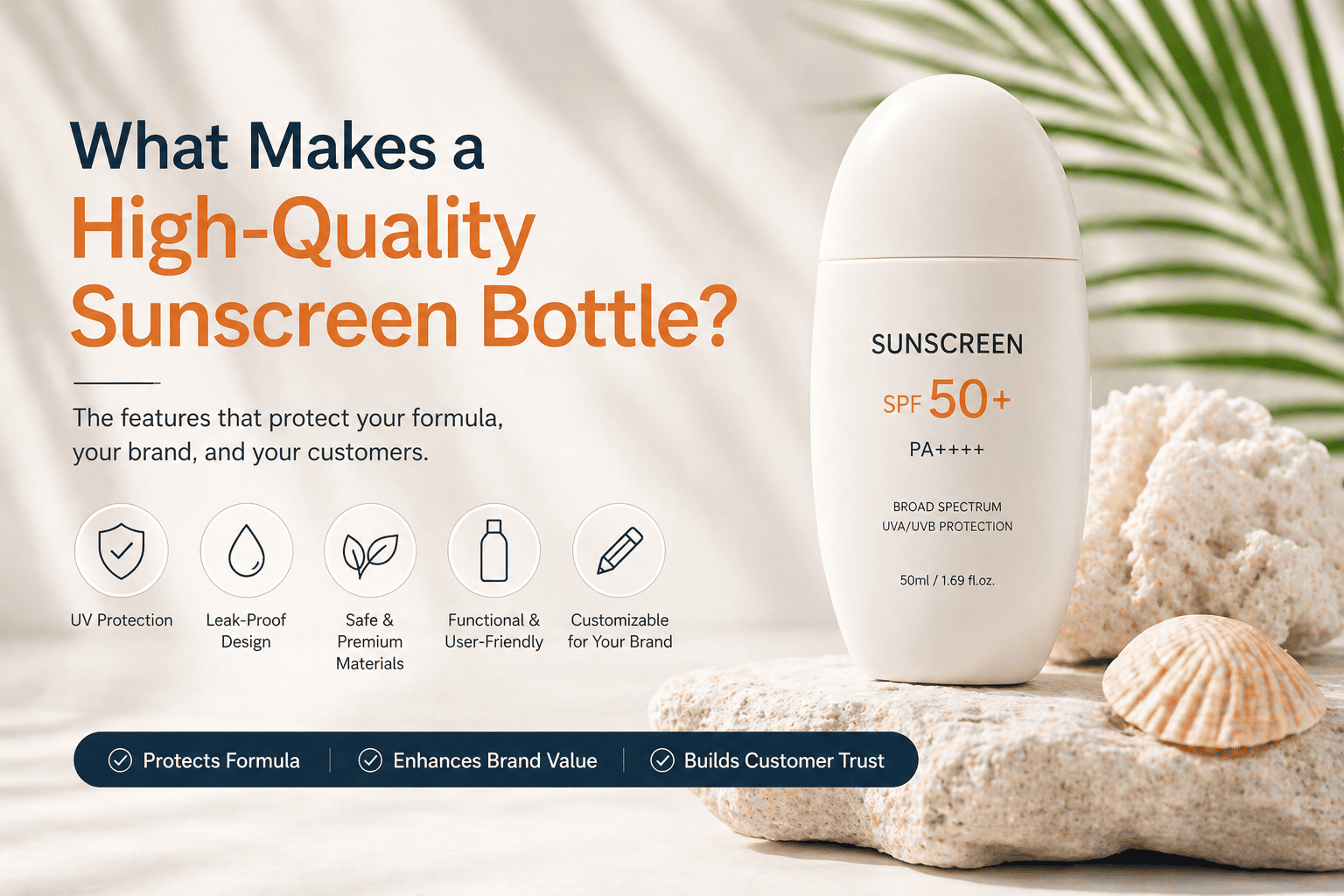
What Makes a High-Quality Sunscreen Bottle?
April 27, 2026 • Mike Lee
You've spent months perfecting your sunscreen formula, but you know that the bottle is the first thing your customer will see and touch. A cheap, leaky, or poorly printed bottle can instantly destroy their trust.
A high-quality bottle is defined by its material compatibility, precision engineering for a leak-proof seal, and flawless surface finishing. It must protect the formula inside while perfectly representing your brand's quality.
Over the 16 years we've been exporting, I've seen it all. I once had a new brand manager come to us in a panic. Their previous supplier provided bottles that looked good in photos, but the caps didn't seal properly. Thousands of units were leaking in warehouses. It was a disaster that cost them money and damaged their reputation. A high-quality bottle isn't just about looking good; it's about functional excellence. It's the result of precise mold making, strict quality control, and a deep understanding of how materials behave. This is what we focus on. It’s the unseen details that separate a great bottle from a potential brand catastrophe.
How Do You Choose the Right Bottle Material for Your Formula?
You know your sunscreen formula is unique, but you're not sure which plastic will protect it best. You're worried that the wrong material could cause leaks, contamination, or even degrade your product over time.
You must choose a material that is chemically compatible with your sunscreen's ingredients. PE is flexible for squeeze tubes, PET offers clarity and a premium feel, and PP is excellent for rigid caps and airless pumps.
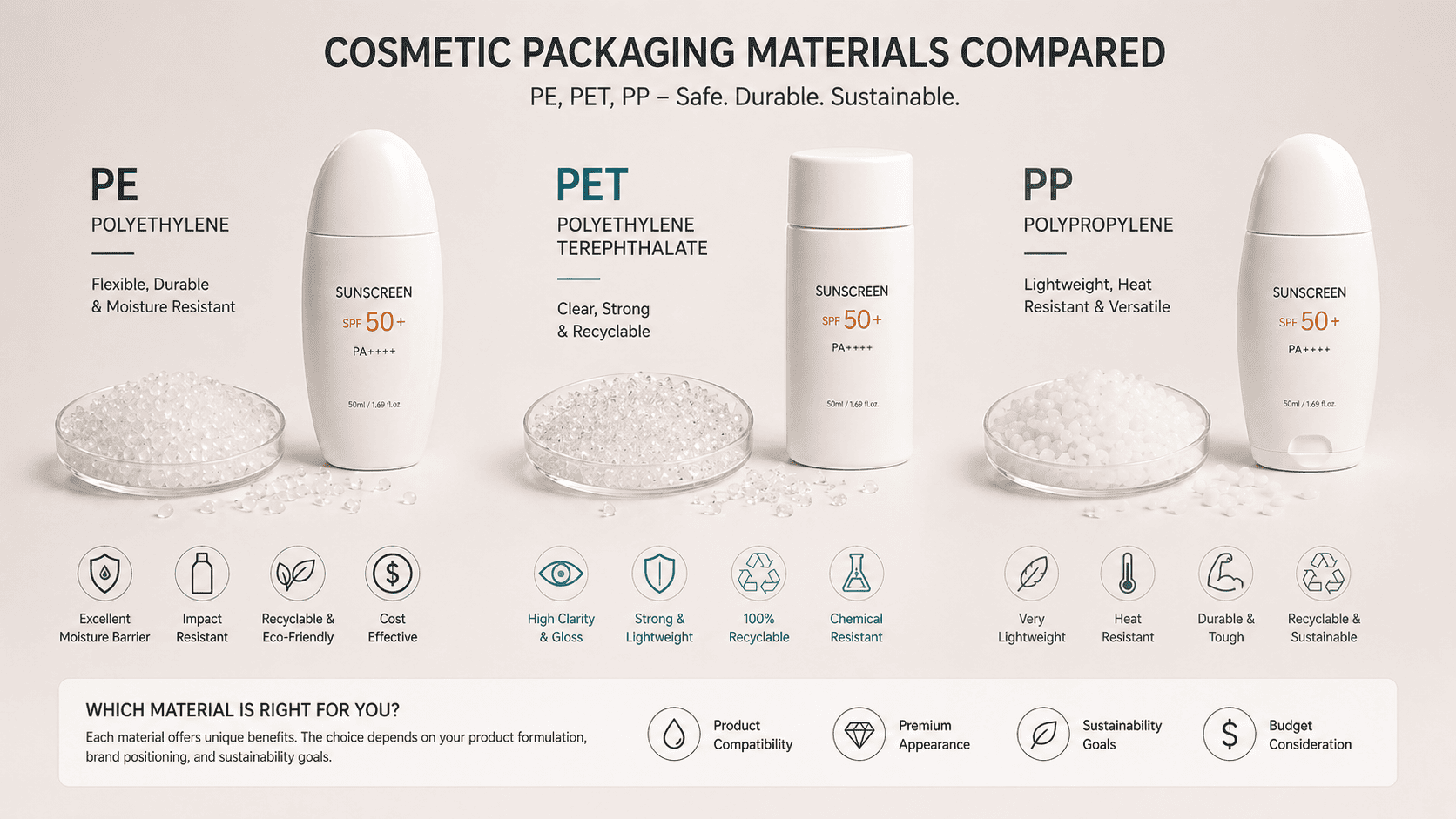
This is one of the most critical technical decisions you'll make, and it's where having an experienced manufacturing partner is essential. It's not just about what looks best. We always start by asking about your formula. Does it contain high levels of oils or specific active ingredients? This helps us determine chemical compatibility. For a classic, easy-to-use beach sunscreen, a soft-touch PE (Polyethylene) squeeze tube is often perfect. It's flexible, durable, and cost-effective. For a high-end facial sunscreen, you might prefer PET (Polyethylene Terephthalate). It can be molded to look and feel like glass, offering crystal clarity that showcases the product inside. Then there's PP (Polypropylene), which is more rigid and has a high melting point, making it ideal for caps, closures, and the complex mechanisms inside airless pumps. We help you navigate these choices to ensure your packaging not only looks great but also functions perfectly from the production line to your customer's hands.
Material Selection Guide
| Material | Best For | Key Characteristics | Common Use Cases |
|---|---|---|---|
| PE | Flexible and durable applications | Soft, squeezable, good chemical resistance | Squeeze tubes, standard bottles |
| PET | Premium, high-clarity applications | Glass-like clarity, strong, good barrier | Luxury lotion bottles, sprays |
| PP | Rigid components requiring heat resistance | Stiff, durable, high melting point | Caps, jars, airless pump parts |
What Should Be on Your Sunscreen Packaging Buying Guide?
You're ready to find a supplier, but you don't know what questions to ask. You need a checklist to ensure you're choosing a true partner, not just a factory that will create future problems for you.
Your buying guide should focus on three areas: Supplier Verification (certifications, factory audits), Quality Control (mold precision, raw material traceability), and Service (communication, sampling process, export experience).
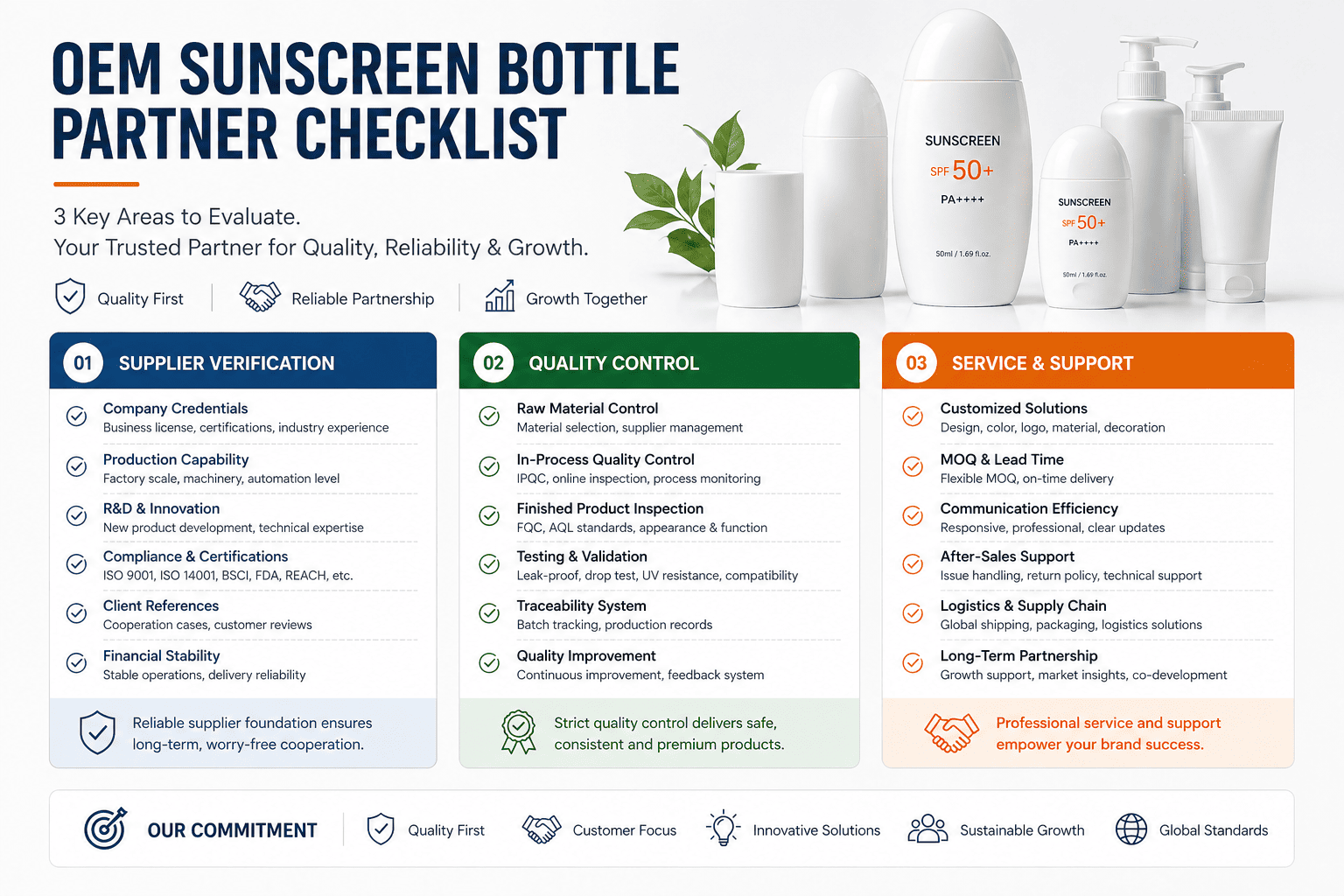
When you're choosing a manufacturer, you're not just buying a product; you're entering a long-term partnership. It’s exactly what a procurement director like Shubihika at RAS BEAUTY looks for. So, what should be on your checklist? First, Supplier Verification. Ask for their business license, export history, and quality certifications like ISO 9001. Can you tour the factory, even virtually? Second, Quality Control. This is where the details matter. Ask about their mold-making process. Are their molds high-precision? Where do they source their raw materials? Can they provide traceability reports? Ask to see their QC station and learn about their inspection process. Third, Service and Communication. Is there a dedicated, English-speaking project manager for your account? How fast is their sampling process? At Rland, our 3D printers can create a prototype in 72 hours. This entire checklist isn't about being difficult; it's about being diligent. A great supplier will welcome these questions and have ready answers.
How Do You Select the Right Packaging from Design to Production?
You have an idea for your packaging, but you're not sure how to get from a sketch to 50,000 finished units. The process seems complex, and you're worried about mistakes and delays along the way.
You follow a simple, three-step process with your manufacturing partner: finalize the design, approve a physical pre-production sample, and then authorize mass production. The sample approval step is the most critical.
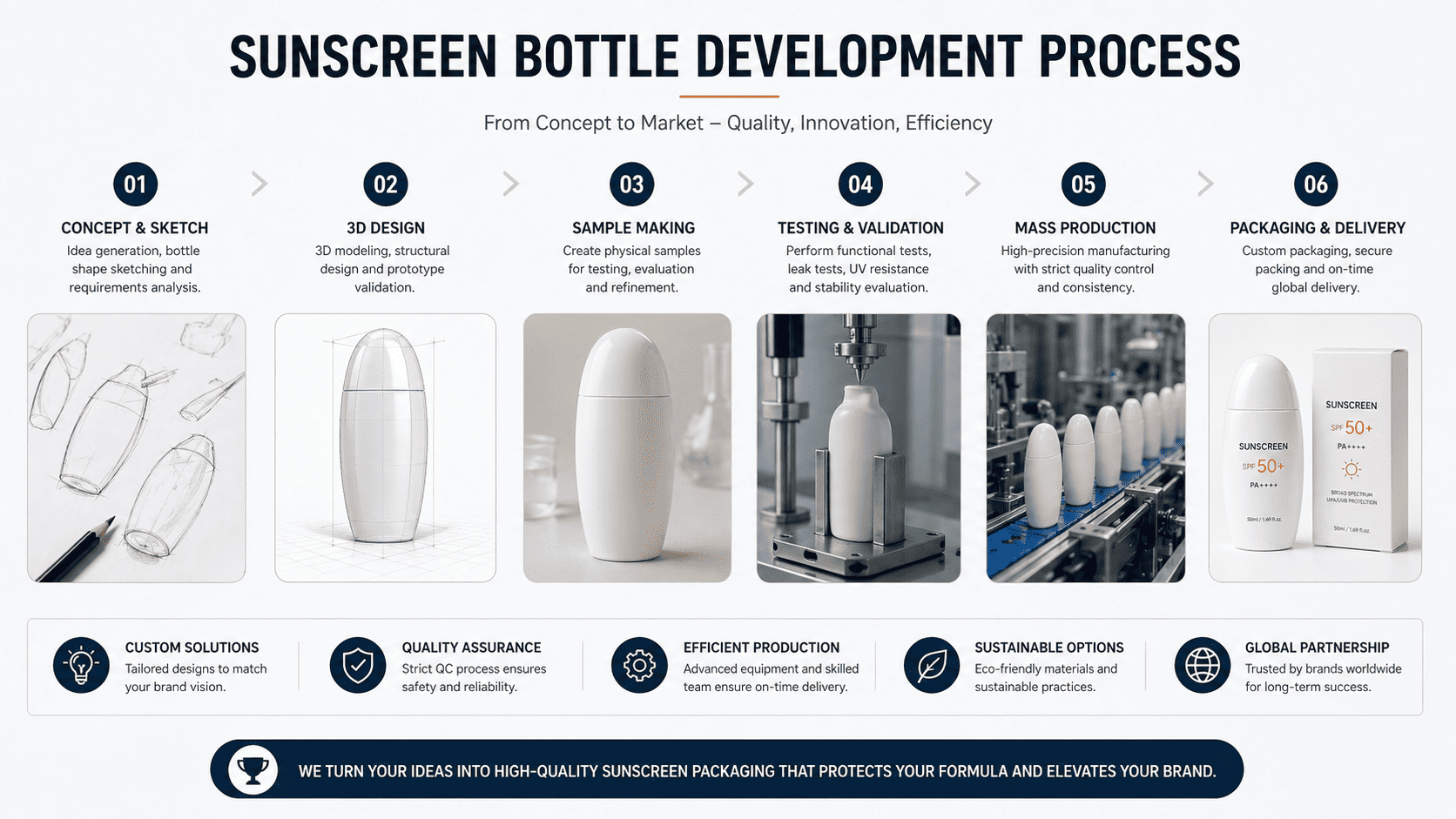
This is the core of our partnership with brands. Let's make it simple. It all boils down to a clear, logical progression.
Step 1: Design Finalization. You come to us with your idea. It could be a detailed 3D file or just a simple sketch. Our engineers will work with you to refine it for manufacturing, ensuring it's not just beautiful but also functional and efficient to produce. We'll decide on materials, colors, and printing methods.
Step 2: Sample Approval. This is the most important step. We will create a physical pre-production sample for you. Don't skip this. You need to hold it in your hand, test the cap, feel the texture, and see the color in person. Only when you say "this is perfect" do we move forward. This single step prevents almost every potential problem.
Step 3: Mass Production. Once you approve the sample, we begin. The approved sample becomes our "golden standard." Every single bottle that comes off our production line is measured against it to ensure 100% consistency. This simple, proven process is how we've successfully launched products for over 500 brands.
Conclusion
A high-quality bottle is a result of the right material, a verified supplier, and a clear manufacturing process. Get these three things right, and your packaging will build your brand.
Written by

Mike Lee
You may also be interested in:
What Should You Know Before Starting OEM Sunscreen Packaging?
You have a vision for your brand and a killer sunscreen formula ready to go.
How Can You Import Sunscreen Bottles from China Safely?
You've found the perfect packaging and the price is great, but the idea of importing

How Do You Choose the Best Sunscreen Lotion Bottle for Your Brand?
Your perfect sunscreen formula is wasted in a leaky bottle. Customer complaints are piling up,
What Are the Biggest Challenges in Sunscreen Packaging Manufacturing?
You have a fantastic sunscreen formula ready to go, but you're hearing horror stories about