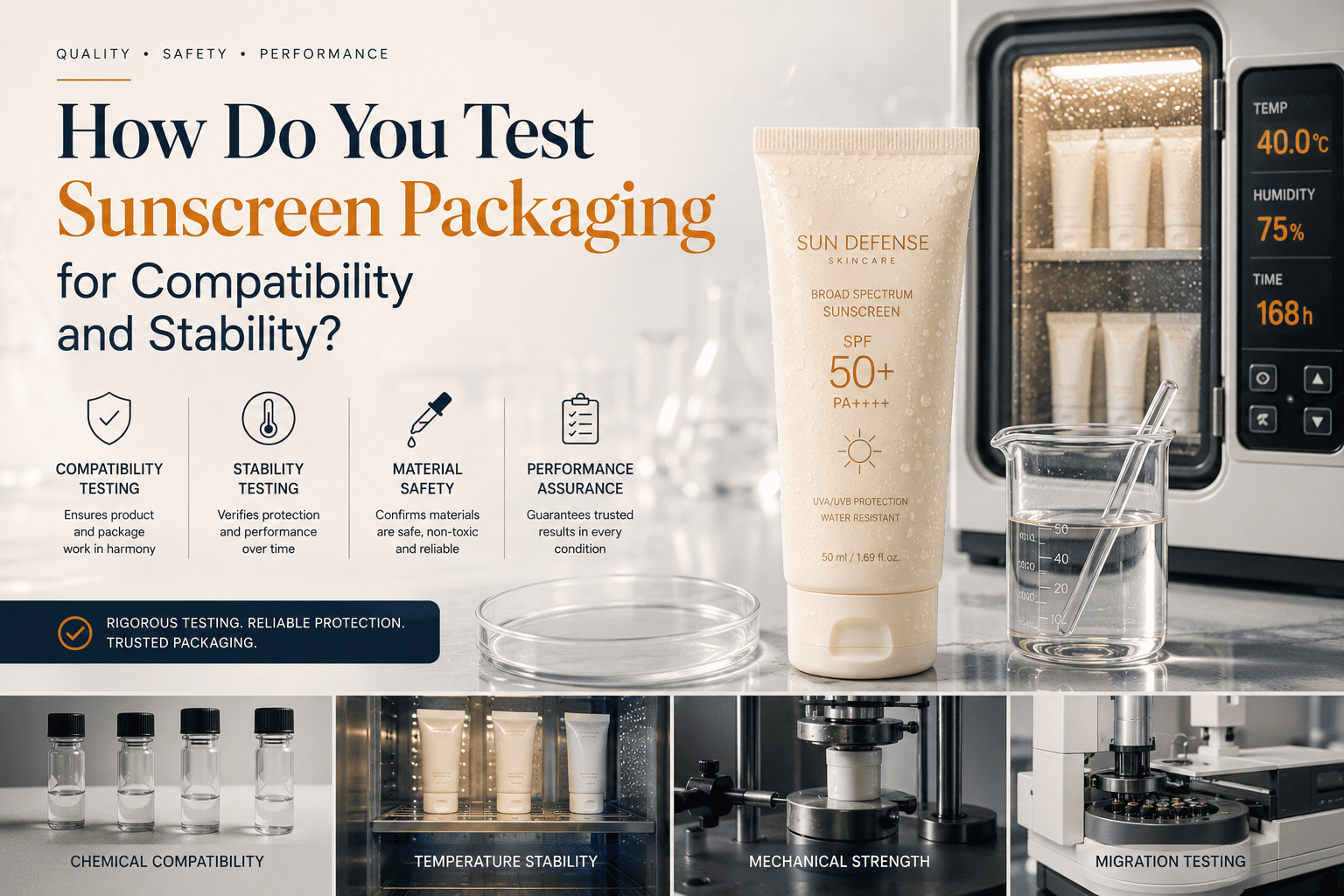
How Do You Test Sunscreen Packaging for Compatibility and Stability?
May 25, 2026 • Mike Lee
You've finally approved your perfect sunscreen formula. Now you need to package it, but a hidden fear creeps in: what if the bottle itself ruins your product over time, causing leaks, discoloration, or failure?
You must perform compatibility and stability tests by exposing your final packaged product to various conditions. This ensures the packaging doesn't react with the formula and the product remains safe and effective through its shelf life.

This is not just a theoretical problem. I remember a brand that came to us after a disastrous launch. They loved their formula and rushed it into a bottle they thought was compatible. Six months later, they received reports of the bottles becoming brittle and cracking. The oils in their sunscreen were slowly degrading the specific type of plastic they chose. They learned a hard lesson: the package is part of the product. Testing isn't an optional step; it's the fundamental process that protects your investment, your reputation, and your customers. We see it as our duty to guide our partners through this to ensure success.
What is the Goal of a Stability Testing Protocol?
You know you need to "test" your product, but you're not sure what that actually means. You need a clear framework to ensure your sunscreen looks and performs on day 365 just as it did on day 1.
A stability protocol is a formal plan to verify that your product's quality, safety, and performance remain unchanged within its packaging over its entire shelf life under various environmental conditions.
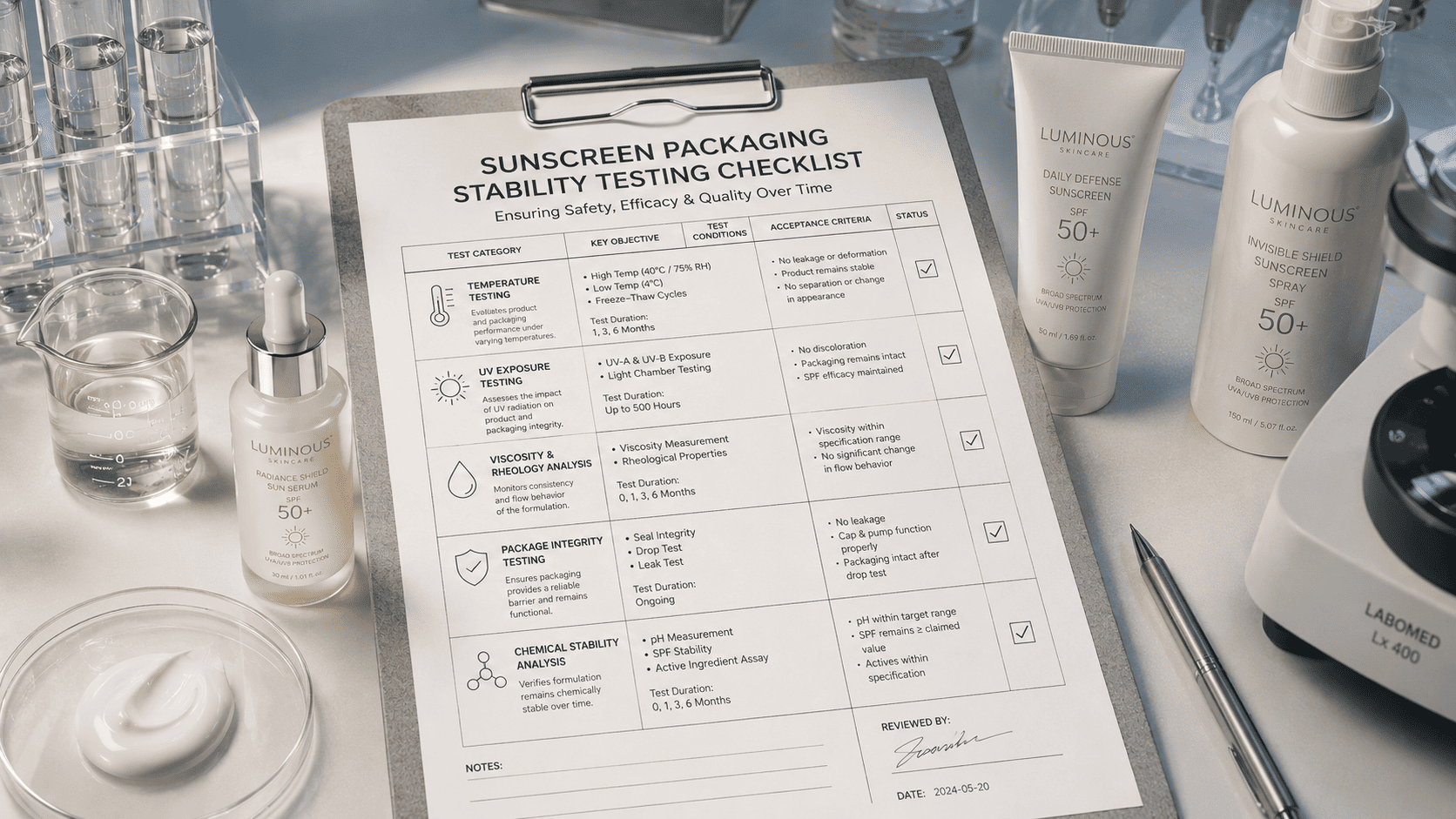
Think of a stability protocol as your product's multi-year endurance race. We aren't just checking if the bottle leaks today. We are simulating the product's entire life journey. Will it survive in a hot warehouse in India for a summer? What about a cold shipping container crossing the ocean? Or sitting on a bright, sunlit store shelf for months? A formal protocol forces us to test for these scenarios. We check for changes in color, scent, and texture. We ensure the SPF protection doesn't degrade. Critically, we observe how the packaging holds up. We look for any staining, warping, or issues with the pump or cap. This isn't just about meeting regulations, which a client like Sani at PT. PASCAL would be focused on; it's about promising quality and delivering on that promise.
Key Stability Checks
| Test Parameter | What We're Looking For | Why It Matters |
|---|---|---|
| Physical Changes | Color, odor, viscosity, separation. | Ensures the customer experience remains consistent. |
| Chemical Changes | pH shifts, degradation of active ingredients (like SPF). | Guarantees the product is safe and effective. |
| Packaging Integrity | Leaks, cracks, discoloration, label adhesion, pump function. | Confirms the packaging is protecting the product. |
| UV Protection | Using opaque or UV-coated materials to prevent light degradation. | Your insight is key here: light is an enemy of stability. |
How Can You Speed Up a Two-Year Shelf Life Test?
You need to launch your product this year, not in three years. The idea of waiting for real-time stability testing to finish is a major roadblock, and you need a faster, reliable alternative.
You use accelerated stability testing. By exposing the product to exaggerated conditions like high heat (e.g., 45°C), you can simulate a longer shelf life in a much shorter period, typically 1-3 months.
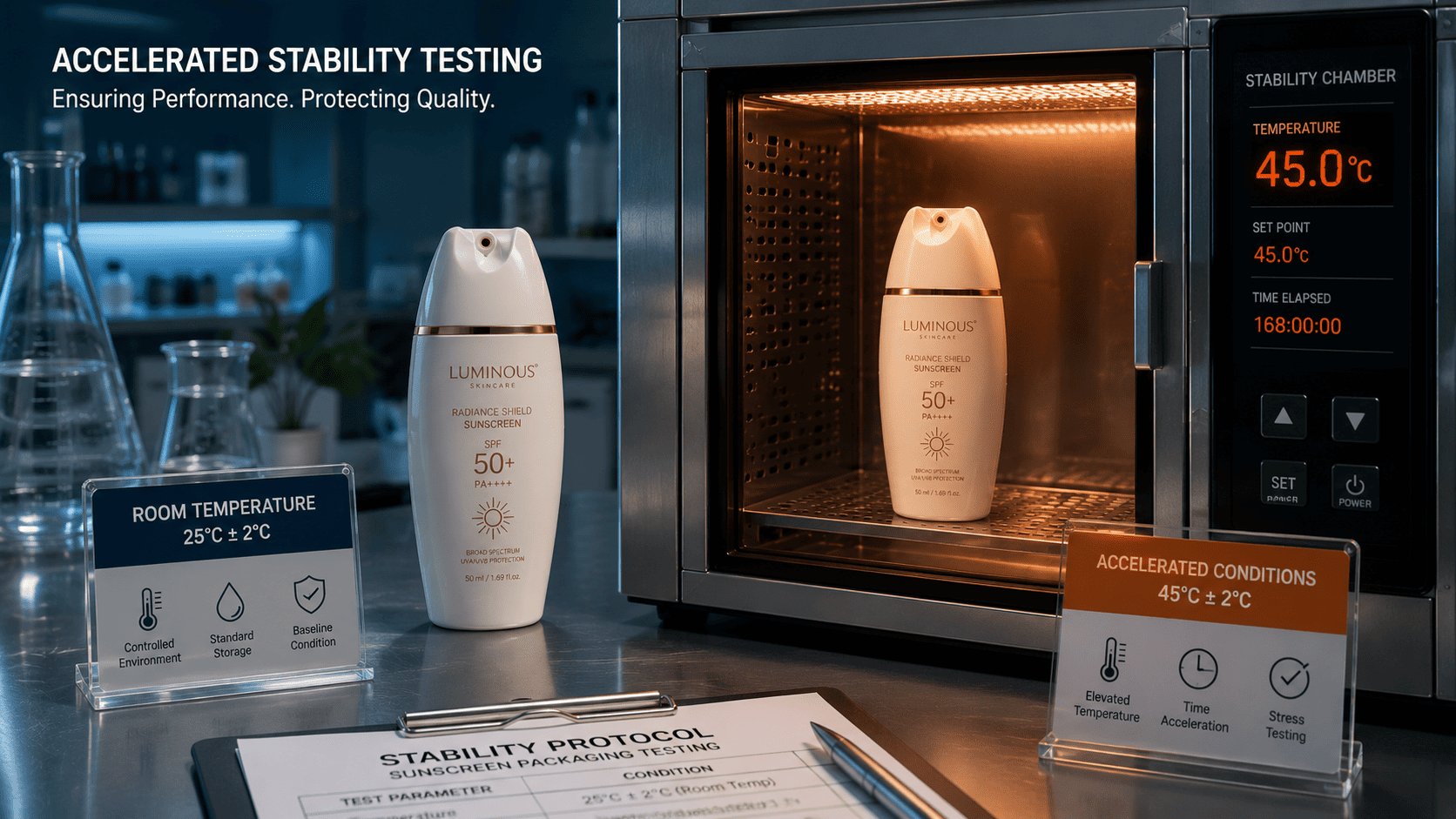
This is the method every major brand uses to get to market faster. We can’t bend time, but we can use science to predict the future. The general rule in chemistry is that for every 10°C increase in temperature, the rate of chemical reactions roughly doubles. So, by storing your packaged product in a stability chamber at 40°C or 45°C for three months, we can get a very good idea of how it will behave over two years at room temperature. We also test for other stresses, like freeze-thaw cycles (moving it from a freezer to a warm room) to simulate shipping during different seasons. This accelerated test is a lifesaver for product development timelines. While it doesn't completely replace long-term testing, it gives you the confidence to launch, knowing your product is stable and safe.
What is Compatibility Testing and Why is it Critical?
You think your plastic bottle is fine because it's "just plastic." You're overlooking the subtle chemical reactions that can happen between your formula and its container, which can lead to disastrous failures.
Compatibility testing is a focused test to ensure your specific formula does not negatively react with its specific packaging. It checks if the formula degrades the plastic or if the plastic leaches into the formula.
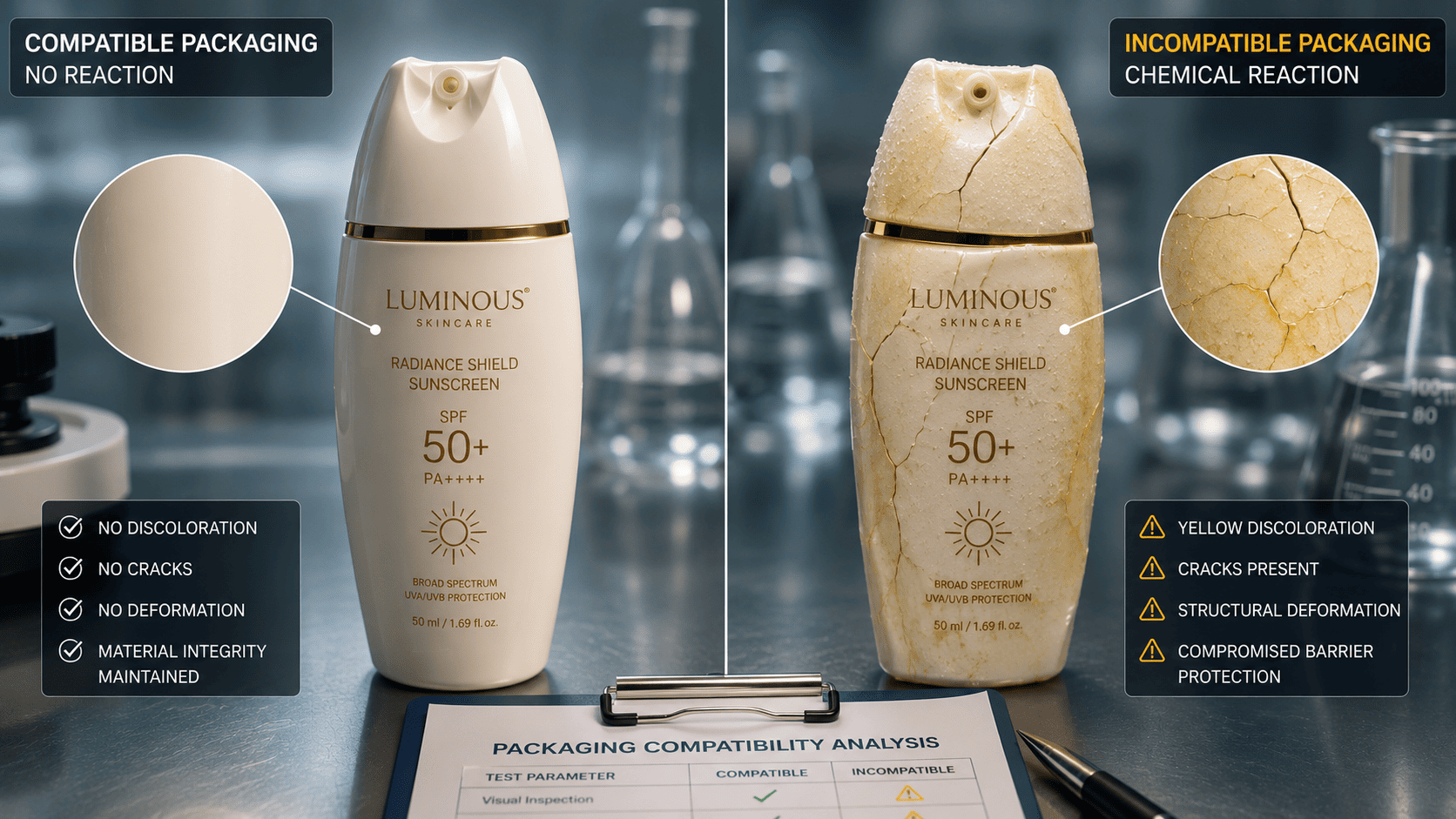
This is the very first test we run, and it's simple but crucial. Before we even think about a full stability protocol, we have to make sure the primary packaging is compatible. As you noted, most plastics are generally stable, but some formulas with high concentrations of oils, alcohols, or certain active ingredients can be aggressive. We perform a "soak test." We fill your chosen bottle with your actual product, seal it, and place it in a 45-50°C oven for several weeks. At the end of the test, we inspect everything. We look at the bottle: Has it warped, paneled (sunk in), or swelled? Has the color of the plastic changed? We also look at the formula: Has its color, scent, or texture changed? We even weigh the bottle before and after to check for product loss through the plastic walls. This simple test prevents 99% of packaging-related failures down the line.
Conclusion
Compatibility and stability testing are not expenses; they are insurance. They ensure your product is safe, effective, and delivers the quality experience your brand promises from the first day to the last.
Written by

Mike Lee
You may also be interested in:
Why Do Premium Sunscreen Brands Invest in Custom Packaging?
You've poured your heart and soul into creating a superior sunscreen formula. Yet, you're considering
Sunscreen Packaging Guide: Materials, Pumps, and Design Explained
You're ready to launch your sunscreen, but the packaging options are overwhelming. You're trying to
Minimalist vs. Colorful: Which Sunscreen Packaging Is Right for Your Brand?
Your sunscreen formula is perfect, but it's invisible on the shelf. You see minimalist and
How Does Packaging Design Really Influence Sunscreen Sales?
You've invested heavily in a superior sunscreen formula, but on a crowded shelf, it gets