Sunscreen Packaging for Hot Climates: What Do Brands Need to Know?
July 28, 2026 • Mike Lee
Your brand is targeting a tropical market, but you're worried. The intense heat and humidity can ruin a good formula and make cheap packaging fail, destroying customer trust in an instant.
For hot climates, brands must choose packaging with superior heat resistance and structural integrity. Use high-density plastics like HDPE or PET and consider designs like airless pumps to protect the formula from heat-induced degradation and leakage.
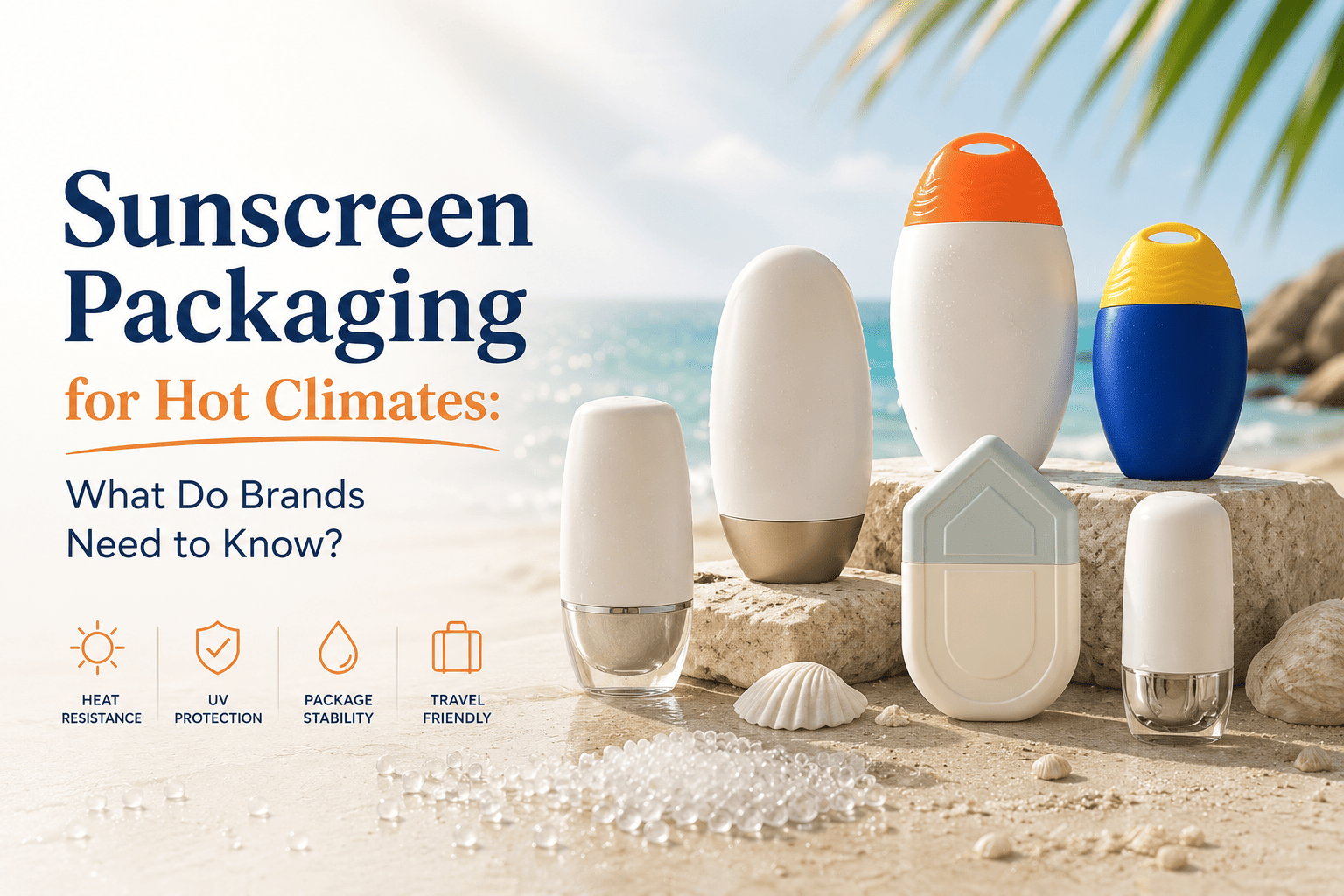
An image of a sunscreen bottle standing strong on a hot, sunny beach, looking pristine and not warped.
You are absolutely right to focus on this. The demand for sunscreen in hot countries is massive because, as you said, people's primary goal is to protect their skin from sunburn. This isn't just about beauty; it's about health. For a packaging manufacturer, this is a huge responsibility. The bottle can't be an afterthought. It must be strong enough to withstand daily squeezing and being thrown in a beach bag, and the quality has to be flawless. I know this from experience. My company is a key packaging supplier for one of the largest sunscreen brands in India. We've been tested in one of the most demanding markets on Earth, and our products have proven they can handle the heat.
What Sunscreen Ingredients Should Be Avoided in Hot Climates?
You're formulating a product for a humid environment, and you know the wrong texture can make it feel heavy, greasy, or sticky. What ingredients will make customers hate wearing your sunscreen?
In hot and humid climates, avoid heavy, occlusive ingredients like petrolatum, mineral oil, and some thick butters. These can feel greasy, trap sweat, and lead to clogged pores and breakouts.
A graphic with a "no" symbol over icons representing heavy oil and thick cream.
While my expertise is packaging, I work so closely with formulators that I've learned what works and what doesn't inside the bottle. The feel of a product is everything in a hot climate. If it feels like a heavy mask, no one will use it, no matter how high the SPF is. The goal is to create a product that feels "light" or "breathable."
Texture and Ingredient Choices for Humid Conditions
| Ingredient Type to Limit | Why It's a Problem in Humidity | Preferred Alternatives |
|---|---|---|
| Heavy Occlusives | They form a thick layer on the skin that traps heat and sweat. | Lightweight Silicones (like Dimethicone) create a smooth, breathable finish. |
| Thick Oils & Butters | These can feel greasy and are more likely to clog pores. | Light Emollients and Dry-Touch Oils absorb quickly and don't leave a residue. |
| High Wax Content | Can contribute to a heavy, pasty feeling on the skin. | Gel-based Formulations using polymers feel cooling and weightless upon application. |
Choosing the right ingredients is the first step. The next step is choosing packaging that can protect and dispense these lighter, often more fluid, formulas without leaking.
Which Sunscreen Is Best for Tropical Countries?
You see the terms "lightweight," "water-resistant," and "gel" everywhere. When customers in a tropical country are looking for the "best" sunscreen, what are they actually looking for?
The best sunscreens for tropical countries are lightweight, non-greasy, water-resistant, and offer high, broad-spectrum SPF protection. Gel-creams and fluid lotions are often the most popular formats for their comfortable feel.
An image of someone easily applying a lightweight sunscreen lotion on their arm at the beach, looking comfortable and not greasy.
The "best" sunscreen is one that people will actually wear every day. In a tropical climate, comfort is king. No one wants to feel like they are wearing a thick, sticky layer of product when it's already 35°C (95°F) and humid. This consumer preference directly influences both the formula and the packaging.
Matching Formula Type to Packaging
For these preferred lightweight formulas, the packaging choice is critical.
- Fluid Lotions: These are thin and can be runny. They are perfect for rigid PET bottles with a lotion pump or a fine-mist sprayer. A simple squeeze tube could lead to a messy user experience if the opening is too large.
- Gel-Creams: These have a bit more body but are still very light. They work wonderfully in our airless pump systems, which protect the formula and provide a clean, measured dose. They also work well in high-quality HDPE squeeze tubes with a smaller opening (orifice) to control dispensing.
Ultimately, the best product is a perfect marriage between a comfortable formula and functional, reliable packaging that makes it a pleasure to use.
Does Sunscreen Degrade in Packaging from Heat?
You're worried about your product sitting in a hot warehouse, on a sunny store shelf, or in a customer's car. Can the heat itself ruin the sunscreen even if it's sealed in the bottle?
Yes, heat absolutely accelerates the degradation of sunscreen. High temperatures can cause active SPF filters to lose effectiveness, emulsions to separate, and the product's color and scent to change, even inside the packaging.
A split image: one side shows a perfect sunscreen lotion, the other shows a separated, oily, and curdled lotion labeled "Heat Damaged."
This is the number one threat for any brand selling in a hot climate, and packaging is the first and most important line of defense. A cheap, thin-walled bottle will not only warp, but it will also allow heat to transfer more quickly to the product inside. This is where our experience in the Indian market becomes so valuable. We have engineered our packaging solutions specifically to combat this problem.
How Quality Packaging Fights Heat Damage
| Heat-Related Problem | The Packaging Solution |
|---|---|
| 1. Formula Separation (Oil & Water Split) | Structural Rigidity: Using thicker-walled HDPE or PET bottles that resist warping and squeezing. This maintains pressure integrity and helps keep the emulsion stable, preventing it from breaking under stress. |
| 2. SPF Filter Degradation | Material Opacity: Using fully opaque plastics (not translucent) to block 100% of UV light, which works with heat to break down active ingredients. Our materials have UV blockers mixed directly into the resin. |
| 3. Leakage and Seal Failure | High-Precision Molds: Our ISO 9001-certified process ensures that the threads on our bottles and caps match perfectly. This creates an airtight seal that can withstand the pressure changes caused by heating and cooling. |
Investing in quality, heat-resistant packaging isn't a cost; it's insurance for your product's stability and your brand's reputation.
Conclusion
For hot climates, use robust HDPE or PET packaging. This protects against heat degradation and meets consumer demand for durable, reliable products, a strategy proven by our success in the demanding Indian market.
Written by

Mike Lee
You may also be interested in:
How Does a Packaging Idea Become a Real Product?
You have a brilliant idea for a cosmetic product, but the path from a sketch
What Will Be the Most Popular Sunscreen Bottle Sizes in 2026?
You're planning your product line for the next two years, but you're stuck on a
What are the Top 10 Sunscreen Packaging Mistakes Brands Make?
You've perfected your sunscreen formula. Now comes the stressful part: packaging. You're worried that a
What Makes a Good Sunscreen Packaging Design?
You've spent a fortune on a great formula, but now you need a package. You're