
What Should Global Buyers Know Before Importing Sunscreen Bottles from China?
November 13, 2025 • Mike Lee
You need high-quality sunscreen bottles, and you know China offers competitive pricing. But the thought of navigating international suppliers, customs, and regulations from thousands of miles away feels overwhelming and risky.
Before importing sunscreen bottles from China, global buyers must verify a supplier's expertise in UV-protective materials, their knowledge of your country's import regulations (like FDA or EU standards), and their proven track record with international logistics. A reliable partner makes the process seamless.
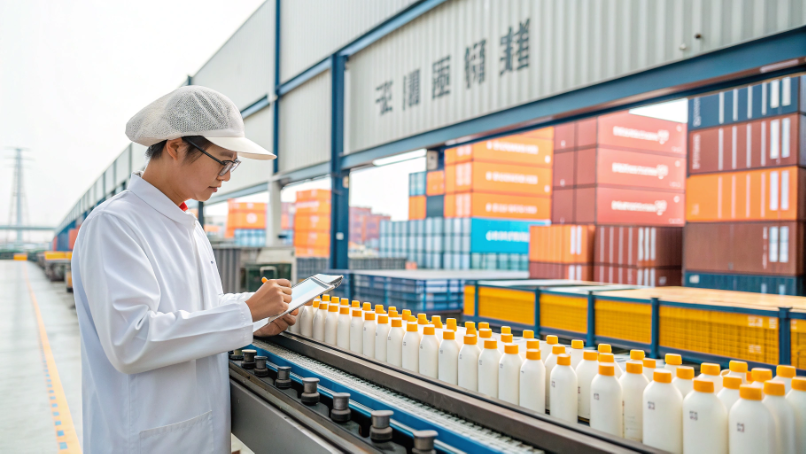
Your insights about the value of a good supplier are spot on. I remember a client from Australia who was about to sign a deal with a new, very cheap supplier they found online. On paper, it looked great. But I encouraged them to ask a few key questions first: "Can you provide FDA food-grade material certification?" and "What's your process for ensuring UV-blocking consistency?" The supplier went silent. They were just a trading company with no real control over production. We then showed them our integrated process, from raw material testing to final shipment documentation. They realized that true cost-effectiveness isn't the price per bottle; it's the peace of mind that comes from a worry-free process with a partner who knows the rules. That's the power of China's mature export industry.
What regulations apply when importing cosmetic packaging from China?
You're worried that a container of bottles might get stuck at the port. You fear that a hidden rule or a missing document could derail your entire launch and cost you thousands.
While packaging itself is often less regulated than the cosmetic formula, the materials must comply with your target market's standards (e.g., FDA in the US, REACH in the EU). A reliable Chinese supplier will know these rules and provide the necessary compliance documents proactively.
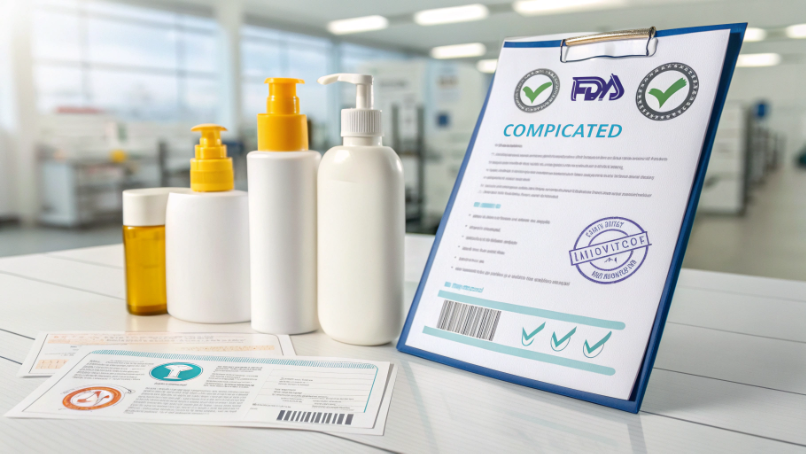
This is where your supplier's experience is critical. After decades of exporting globally, top-tier Chinese manufacturers have this process down to a science. They don't just sell you a bottle; they provide the documentation needed for smooth customs clearance. It's part of the service. You shouldn't have to become an expert in international trade law, because your supplier should already be one.
| Key Regulatory Area | Why It Matters for Your Import |
|---|---|
| Material Compliance | Your packaging materials must be safe for contact with cosmetics. Your supplier must be able to provide reports showing the plastic resin is free from heavy metals and compliant with standards like FDA 21 CFR or EU Regulation (EC) No 1935/2004. |
| Shipping & Customs | Your supplier needs to provide a complete and accurate set of shipping documents, including a Commercial Invoice, Packing List, and Bill of Lading. For some countries, a Certificate of Origin is also needed to verify that the goods were made in China. |
| Physical Standards | This includes things like ISPM 15 compliance for any wooden pallets used in shipping, which is a global standard to prevent the spread of pests. An experienced exporter handles this automatically. |
How do you import cosmetic packaging from China?
You've found some potential suppliers online, but the next steps are a blur. You need a clear, step-by-step process for moving from a website listing to receiving a shipment at your warehouse.
The process involves three main phases: 1) Supplier Vetting and Sampling to confirm quality, 2) Negotiation and Production, where you finalize terms and place your order, and 3) Logistics and Customs, where the goods are shipped and cleared for import.
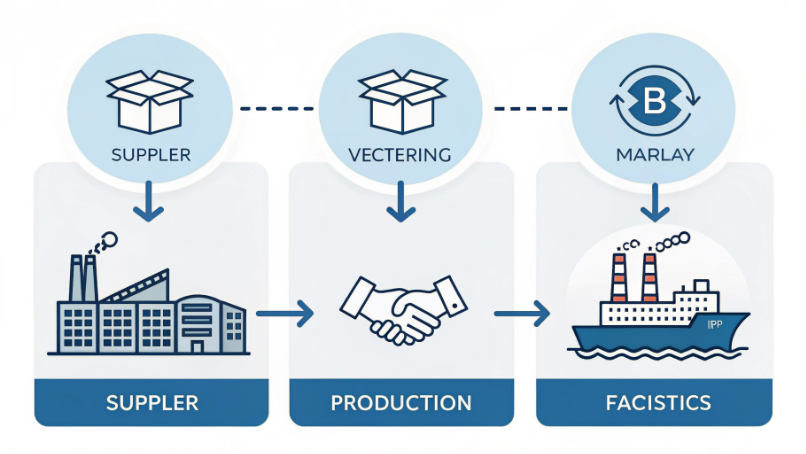
This process might seem complex, but with the right partner, it's very straightforward. A good supplier will guide you through each stage. At our company, we have dedicated English-speaking project managers who handle this for our clients every day.
The Importation Roadmap:
- Vetting & Sampling:
- Find potential suppliers (trade shows, curated B2B sites, referrals).
- Check their business licenses and certifications (like ISO 9001).
- Crucially, order physical samples. Test the fit, the function of the cap or pump, and the quality of the plastic. There is no substitute for holding a sample in your hand.
- Negotiation & Production:
- Finalize the price, payment terms (often 30% upfront, 70% before shipping), and production lead time.
- Approve the "golden sample" that will be the standard for mass production.
- The factory begins mass production. You can often request photos or videos of the process.
- Logistics & Customs:
- Your supplier books freight (sea or air) and prepares all export documents.
- The goods are shipped to your country's port.
- You (or your customs broker) will use the documents from your supplier to clear customs and pay any duties/taxes. The goods are then released for delivery to your warehouse.
What materials should you use for sunscreen bottles?
You know sunscreen needs special protection, but you're not sure which plastic is best. You need to ensure your packaging protects the formula's stability and efficacy from harmful UV rays.
The best materials for sunscreen bottles are multi-layer PE or PET plastics with built-in UV-blocking additives or opaque colorants like white. These materials prevent UV light from degrading the sensitive active ingredients in your sunscreen formula.
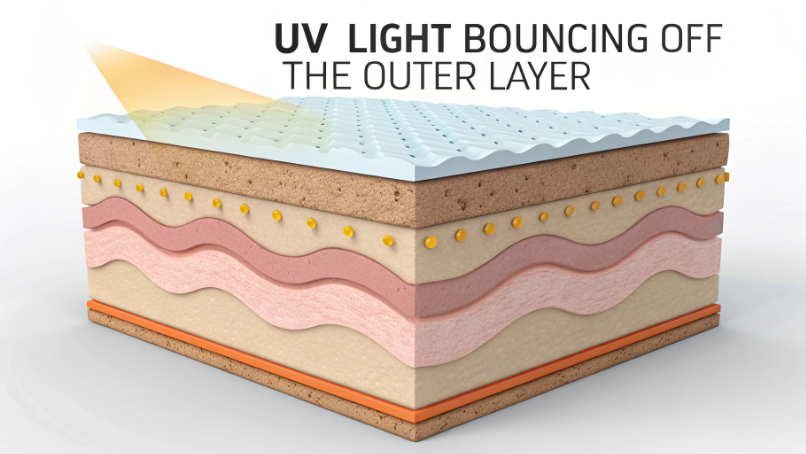
This is a non-negotiable aspect of sunscreen packaging. Standard, clear plastic is not enough. The integrity of your product depends on the bottle's ability to act as a barrier. China's complete supply chain excels here, offering a wide range of sophisticated material options.
Key Material Considerations for Sunscreen:
- UV Protection: This is the top priority. This is achieved in two ways:
- Opaque Color: Using a solid white or dark colorant (like Titanium Dioxide in the plastic resin) physically blocks light.
- UV Additives: Special additives can be mixed into the plastic itself to absorb UV radiation, allowing for translucent or colored bottles that are still protective.
- Material Type:
- HDPE (High-Density Polyethylene): Very common for "squeezable" sunscreen tubes and bottles. It's cost-effective and has good chemical resistance.
- PET (Polyethylene Terephthalate): Often used for more rigid, premium-looking spray bottles or lotion pumps. It has excellent clarity (when desired) and can be easily combined with UV blockers.
- Multi-Layer Bottles: For very sensitive formulas, we can produce co-extruded bottles with an inner layer to protect the formula and an outer layer containing the UV protection and decoration.
Conclusion
Importing sunscreen bottles from China is a smart, cost-effective strategy when you know what to look for. Focus on finding an experienced partner who masters materials, regulations, and logistics to make it worry-free.
Written by

Mike Lee
You may also be interested in:
What Are the Biggest Challenges in Sunscreen Packaging Manufacturing?
You have a fantastic sunscreen formula ready to go, but you're hearing horror stories about

How Can You Reduce Packaging Costs Without Compromising Sunscreen Bottle Quality?
You're trying to grow your sunscreen brand, but rising packaging costs are eating into your

The Complete Importing Guide for Spray Bottles: How Can You Simplify the Process?
You worry about complex customs paperwork and your spray bottles arriving damaged. This uncertainty can
From Molding to Assembly: How Does RLAND Ensure Consistent Spray Quality?
You receive a new shipment of spray bottles, but find that some leak and others
