

How Do You Choose the Right Spray Output (0.12/0.18/0.25ml) for Your Product?
March 18, 2026 • Mike Lee
You're looking at supplier options and see a list of numbers: 0.12ml, 0.18ml, 0.25ml. You know this detail is important, but it feels like technical jargon, and you're worried about making the wrong choice for your product.
Match the spray output to the product's application. Use a low output (0.12ml) for fine, delicate applications like facial mists. Choose a higher output (0.18ml or 0.25ml) for products that need to cover a larger area, such as body sprays or room fresheners.
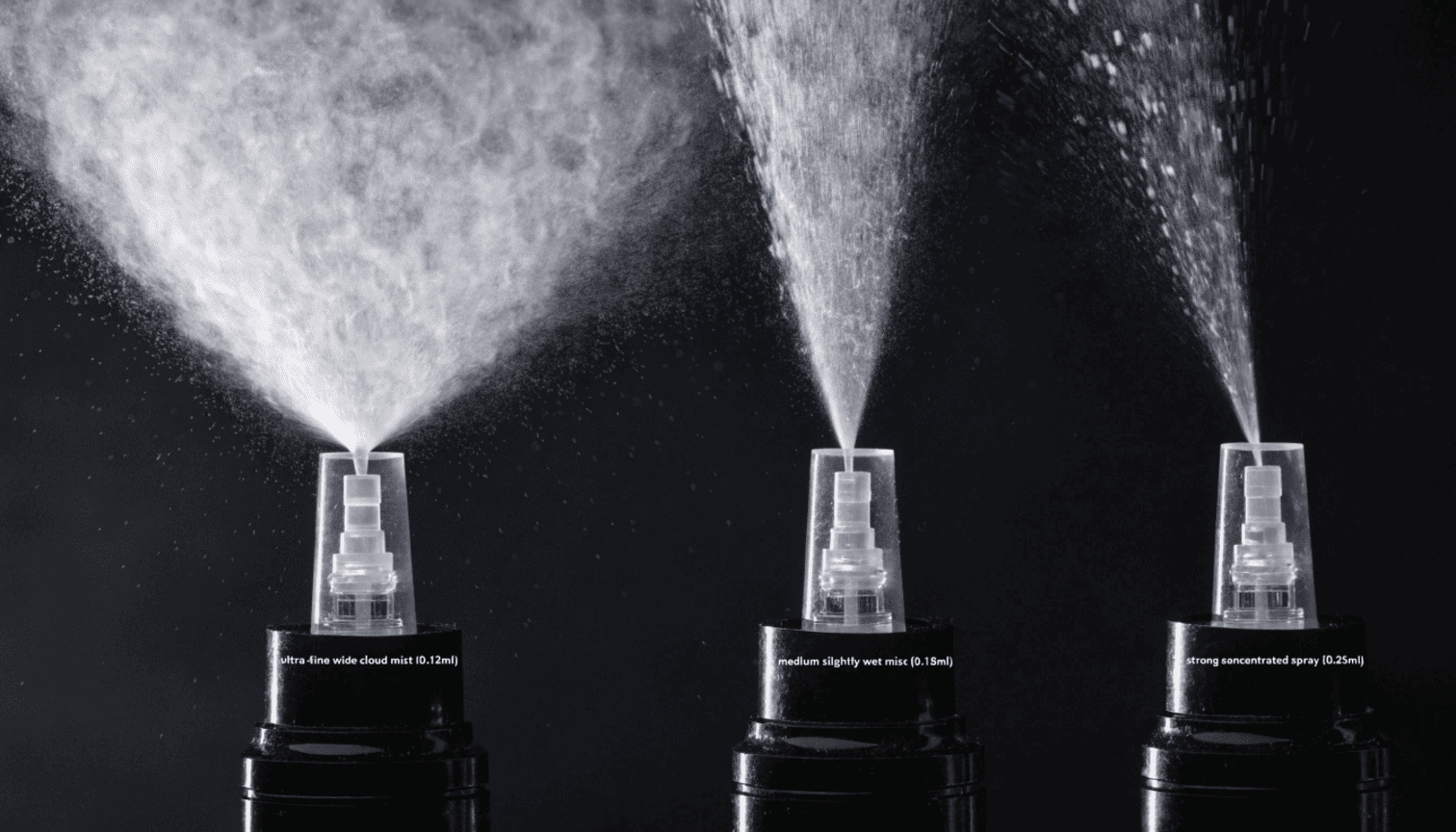
I'll never forget a conversation with a new brand that was developing a high-end hair styling spray. They insisted they needed the "most powerful" sprayer we had. I kept asking, "But where is the product going? What is the goal?" They wanted volume and power. We sent them samples of a 0.25ml pump. They loved the powerful feel. A month later, they were developing a delicate setting spray for makeup. They came back and said, "We need the exact opposite of what you gave us before. We need it to feel like air." It was a perfect "aha!" moment for them. They realized the pump wasn't about power; it was about purpose. The same logic applies: you wouldn't water your garden with a tiny perfume atomizer, and you wouldn't spray your face with a garden hose.
What Do These Spray Output Numbers Even Mean?
You see the numbers in a catalog, but what do they physically represent? You're trying to picture the difference between 0.12ml and 0.25ml and how it will affect your customer's experience.
The number simply refers to the volume of liquid dispensed with a single full pump. It's a direct measure of how much of your product the customer will use in one push. A lower number means a finer, drier spray; a higher number means a wetter, more generous spray.
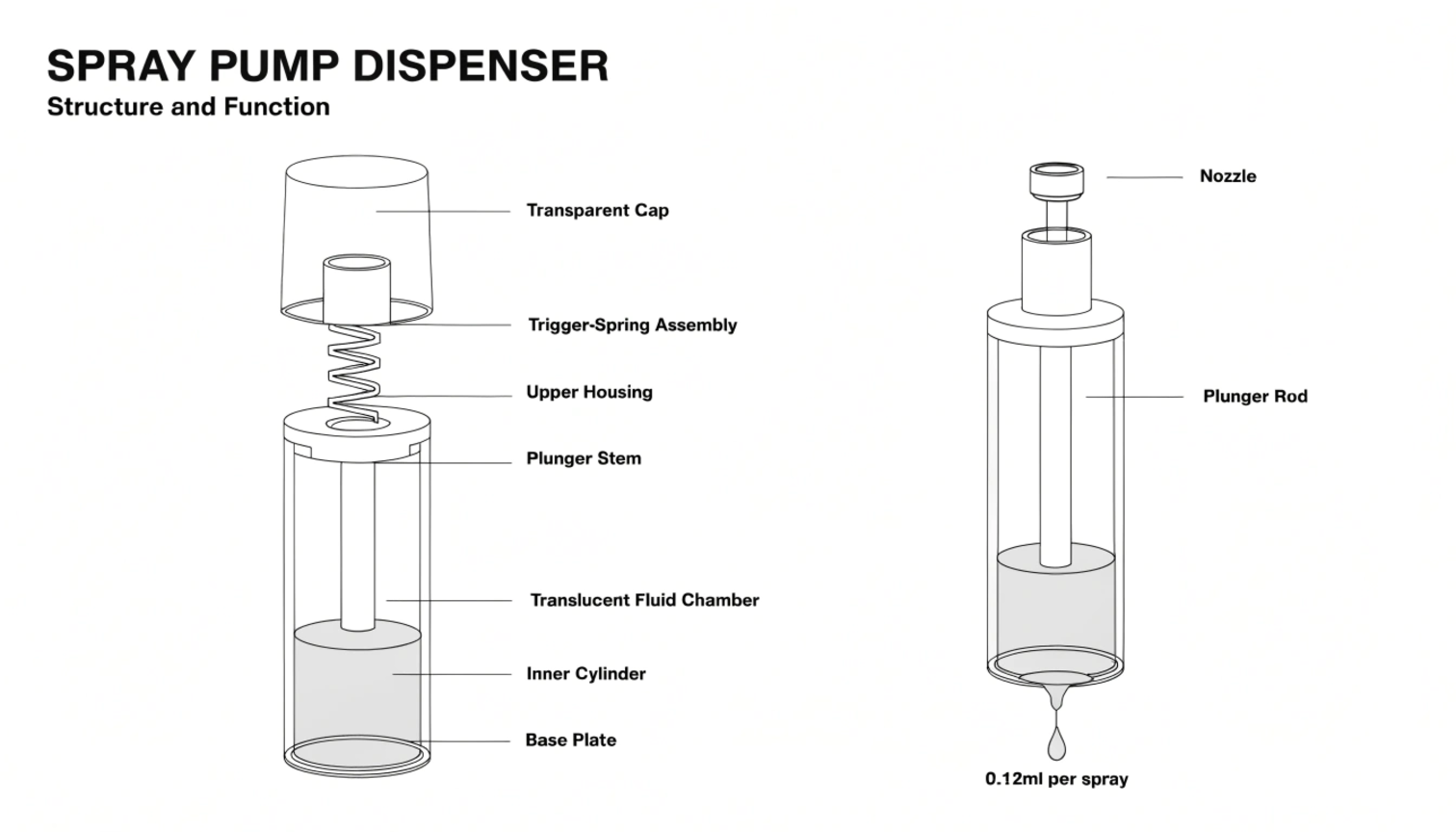
Think of it in terms of droplet size and density. A 0.12ml pump is designed to atomize that tiny amount of liquid into thousands of micro-droplets, creating a soft, wide, cloud-like mist. This is perfect for the face because it provides even coverage without feeling wet or disruptive. As you increase the output to 0.18ml or 0.25ml, the pump is pushing out more liquid through a similarly sized nozzle. This results in larger droplets and a more concentrated, wetter spray. This isn't a bad thing; it's just designed for a different purpose. For a body spray, you want to cover a larger area of skin quickly. For a room spray, you want the droplets to have enough weight to travel through the air. Choosing the right output is the first step in creating the perfect sensory experience for your specific product.
Matching Output to Application
| Output Volume | Droplet Size | Common Application | Desired User Experience |
|---|---|---|---|
| 0.12ml | Very Fine | Facial Mist, Setting Spray | A gentle, "dry" cloud |
| 0.18ml | Medium | Hair Spray, Body Mist | Noticeable, quick coverage |
| 0.25ml+ | Large | Room Spray, Cleaning Products | Powerful, drenching spray |
Does the Spray Tip Size Matter?
You're trying to get even more technical, thinking that the size of the hole in the sprayer must be the key. You wonder if you should be asking your supplier for a specific "tip size" to get the results you want.
For cosmetic pumps, it's not about a changeable "tip size." The spray pattern is determined by the entire pre-assembled pump engine—a system including the nozzle orifice, piston, spring, and chamber that are engineered to work together.
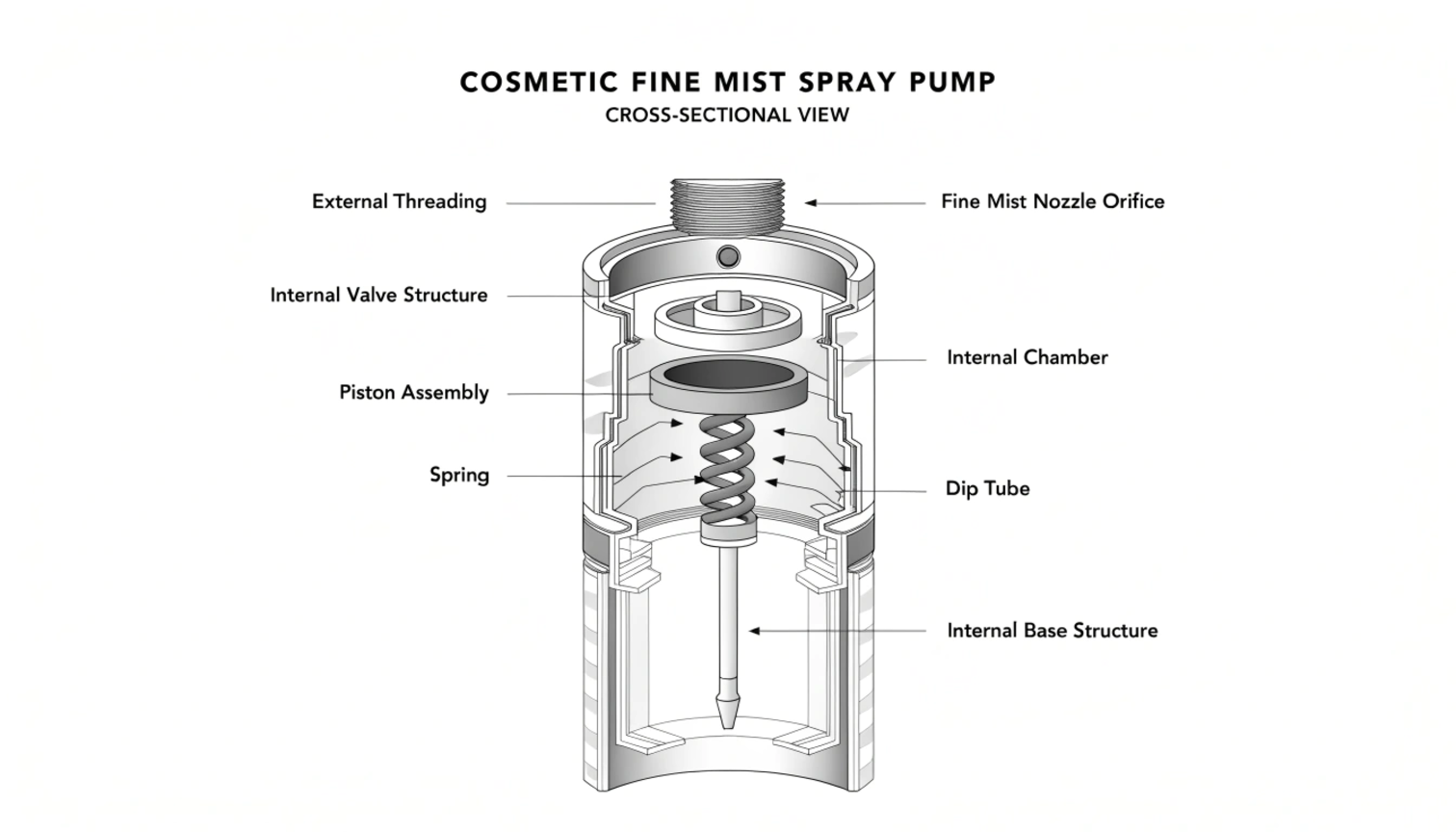
While the size of the final opening (the orifice) is a critical factor, it's just one part of a complex system. A high-quality fine mist pump is a small, precise engine. The length of the piston stroke, the tension of the spring, and the shape of the internal chamber are all calibrated to build the right amount of pressure to force the liquid through the tiny orifice, causing it to atomize into a perfect mist. This is why you can't simply change a "tip" on a cosmetic pump. The entire mechanism is designed as a single unit to achieve a specific output and spray pattern. When you work with a manufacturer like Rland, you're not just choosing a bottle; you're selecting a precisely engineered pump engine that has been tested to deliver a consistent, reliable performance for your specific product type.
What Is the Difference Between a 515 and 517 Spray Tip?
You've done some research online and seen people discussing different spray tip numbers like "515" and "517." You're wondering if you need to specify this for your cosmetic product to get the right spray width.
Spray tip codes like "515" and "517" apply to industrial airless paint sprayers, not cosmetic pumps. They indicate spray angle and orifice size for painting walls, not for dispensing a facial mist. This terminology is not relevant when ordering cosmetic packaging.
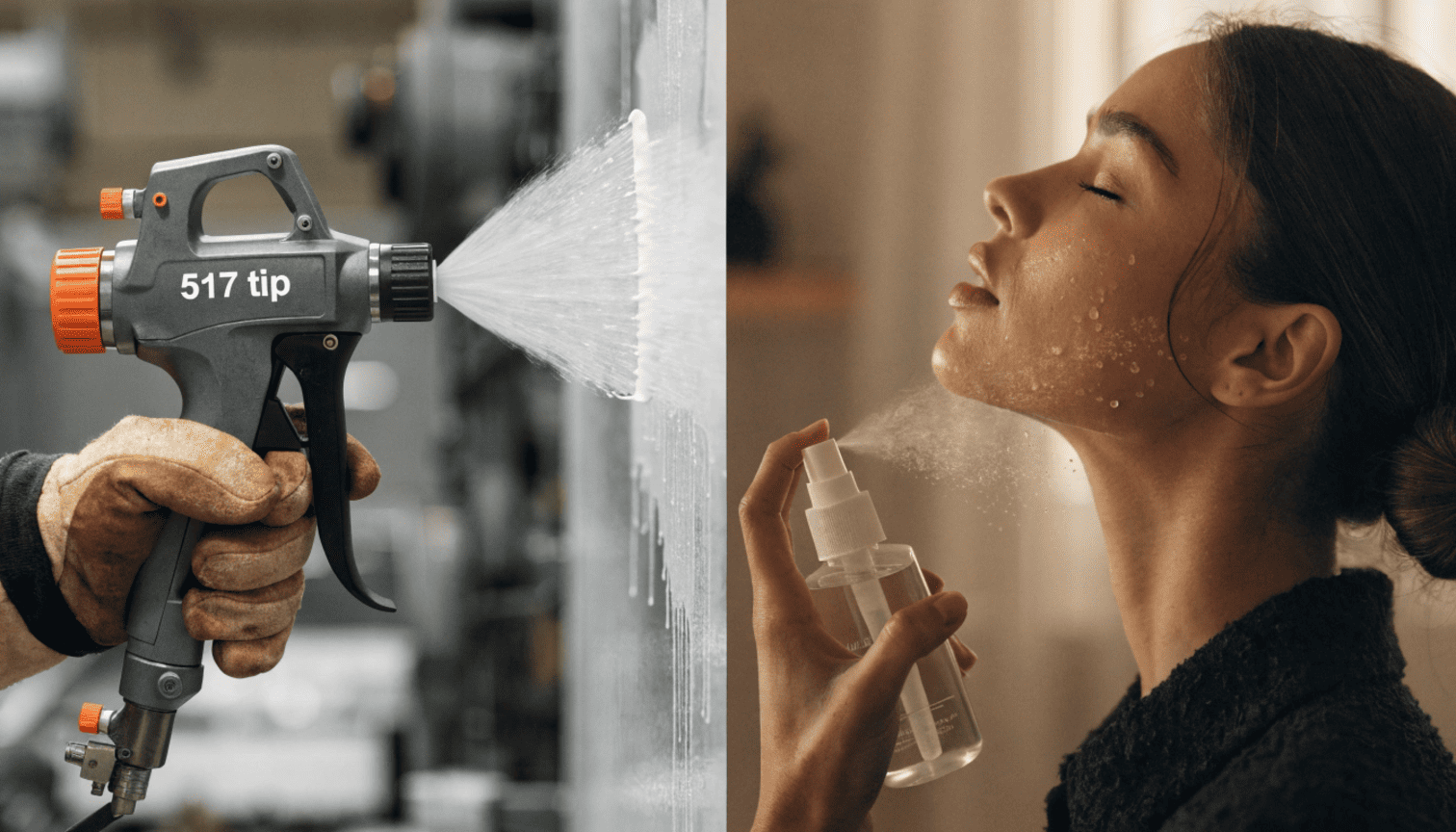
This is a very common point of confusion, so it's great to clarify. In the world of industrial paint sprayers, a "517" tip means the spray fan is 5 x 2 = 10 inches wide, and the orifice is 0.017 inches in diameter. This system is designed for high-volume, high-pressure applications covering large surfaces. Cosmetic pumps operate on a completely different scale and principle. Instead of asking for a "tip number," you should communicate your needs to your packaging partner using the right language. Tell them: "I need a pump for a facial mist, so the output should be around 0.12ml, and I want the spray pattern to be wide and gentle." Or, "This is for a spot-treatment hair product, so I need a more direct, targeted spray." We can then match your product's purpose with the correct, pre-engineered pump engine to achieve that exact result.
Conclusion
Choosing the right spray output is simple when you focus on your product's end-use. Match the output volume to the application—fine for face, generous for body—and work with your supplier to select the perfect pump engine for your needs.
Written by

Mike Lee
You may also be interested in:

Why Is Sunscreen Packaging More Challenging Than Skincare Packaging?
You have a great serum in a beautiful bottle and a moisturizer in a premium

How Can You Prevent the Top 5 Sunscreen Packaging Failures?
Your sunscreen launch is at risk from hidden packaging flaws. These issues often appear post-launch,
What's the Best 50ml Fine Mist Spray Bottle for a Facial Mist?
Your facial mist formula is perfect, but the wrong spray bottle can deliver a harsh,

Why Do Some Spray Bottles Smell Like Plastic: A Material & Quality Guide?
You just received a shipment of spray bottles for your new product, but when you
