
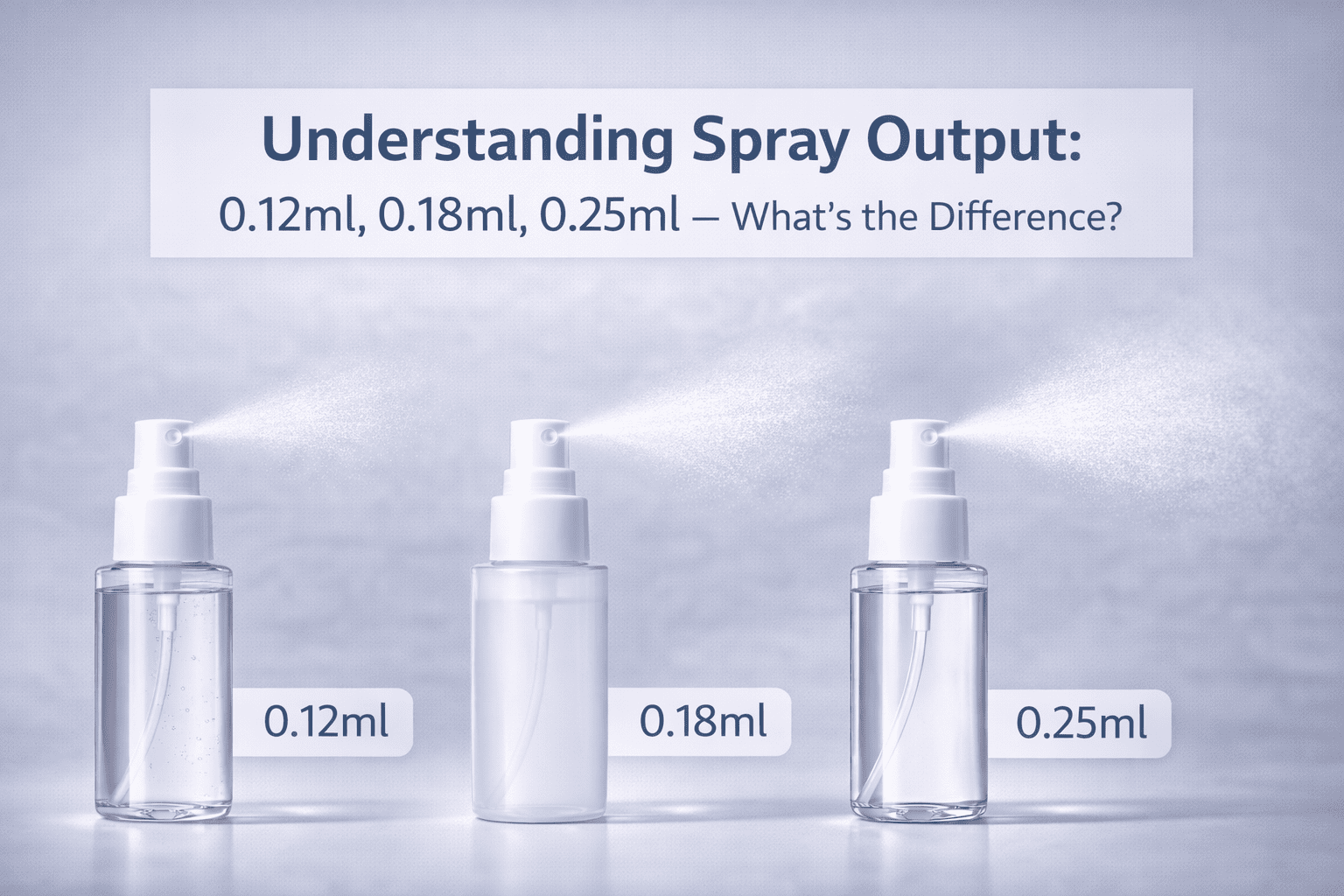
Understanding Spray Output: 0.12ml, 0.18ml, 0.25ml — What’s the Difference?
January 6, 2026 • Mike Lee
You're looking at a spec sheet for a spray nozzle, and the numbers 0.12cc, 0.18cc feel meaningless. Choosing the wrong one can make your product feel cheap or wasteful, but it's just a guess.
The main difference is the user experience. A lower output like 0.12ml delivers a fine, gentle mist perfect for the face. A higher output like 0.25ml provides a wetter, more substantial spray for covering larger areas like hair or body.
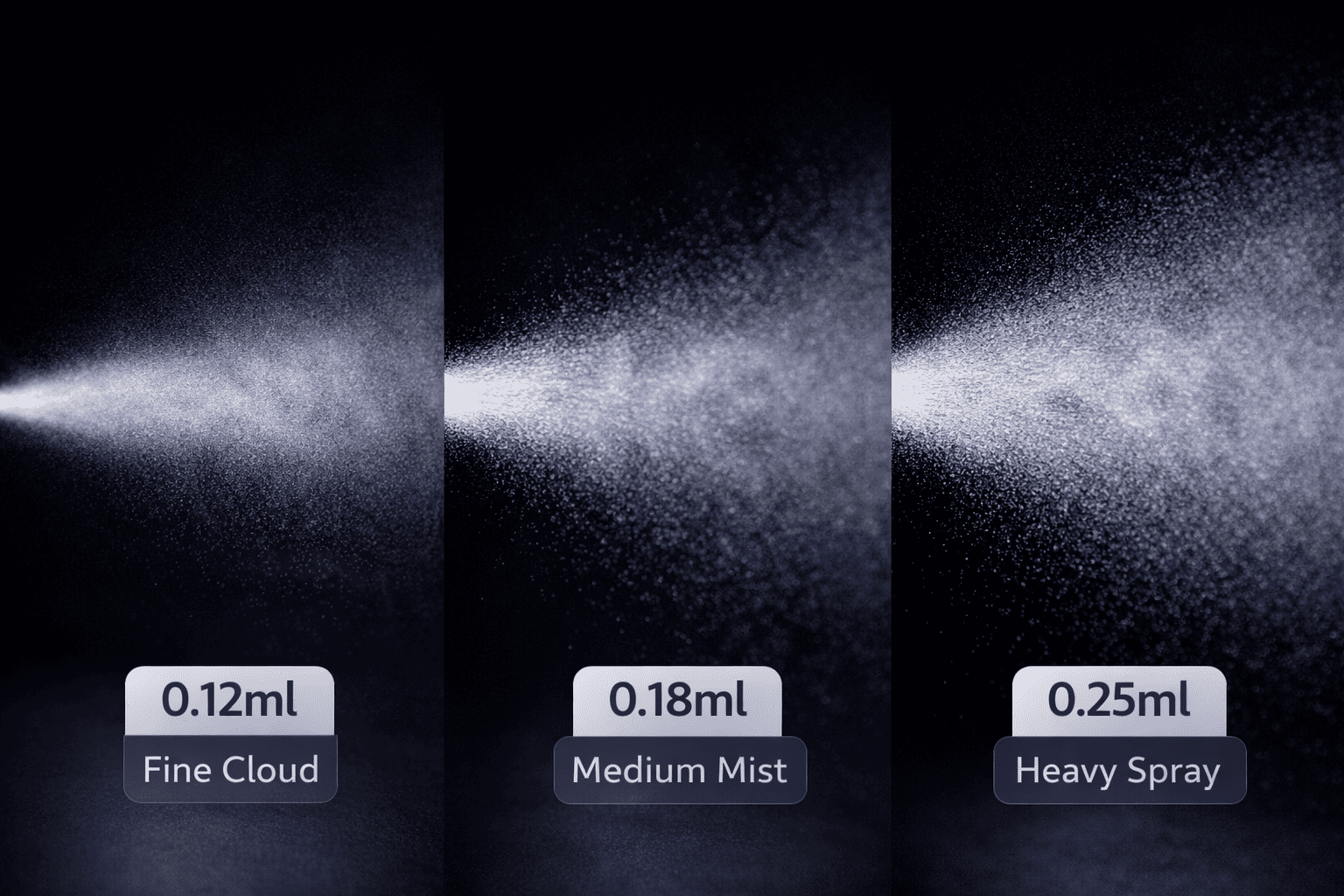
I learned this lesson the hard way. Early on, we had a client developing a luxury facial setting spray. We initially used a standard 0.18ml sprayer because it was readily available. The client's feedback was that the spray was too "wet" and "aggressive," potentially smudging makeup. We switched to a 0.12ml nozzle, and it completely transformed the product. The mist was so fine it felt like a soft cloud, and it set makeup perfectly. That small change from 0.18ml to 0.12ml made the difference between a good product and a fantastic one. It taught me that this tiny number has a huge impact on how a customer feels about a brand.
What is spray output?
You see "spray output" or "dosage" on a technical document, and it seems like jargon. You're not sure how this small technical detail translates into what your customer actually experiences.
Spray output, measured in milliliters (ml) or cubic centimeters (cc), is the precise volume of liquid dispensed every single time you press the pump. A smaller number means a finer, more delicate mist.
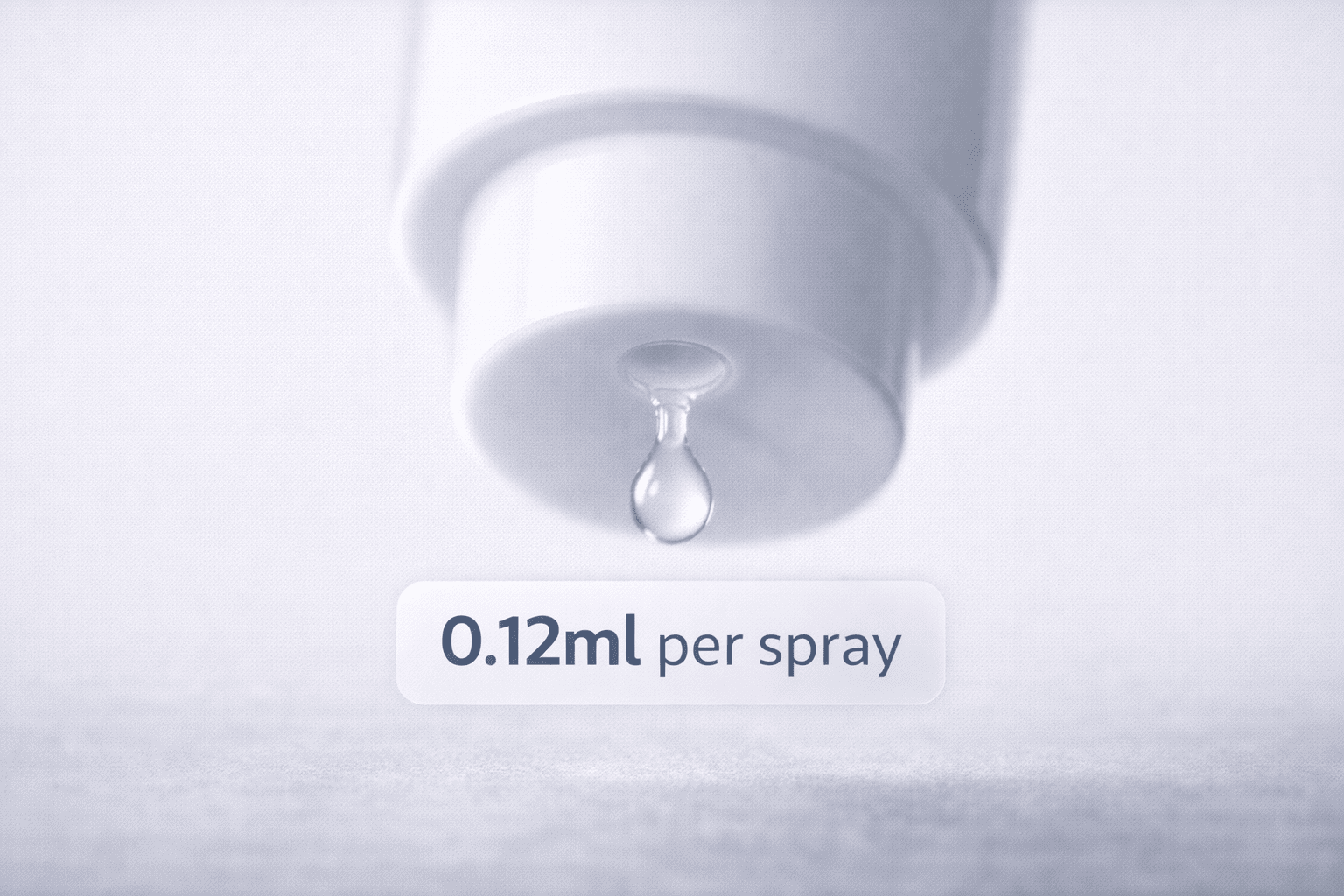
Let's break it down simply. Imagine you are watering plants. Sometimes you want a gentle, fine mist that won't damage the delicate leaves. Other times, you need a stronger, more direct stream to water the roots. A spray pump works on the same principle. The "spray output" is the measurement of how much liquid is released in one single pump. Your insight is exactly right: this volume is directly related to the size of the droplets. A smaller amount of liquid (like 0.12ml) is forced through the nozzle, breaking it up into thousands of tiny, lightweight droplets. This creates that beautiful, soft mist. A larger volume (like 0.25ml) results in bigger, heavier droplets, creating a wetter and more powerful spray. Understanding this helps you control not just how much product is used, but how the product feels on the skin.
How do you choose the right spray output for your product?
You know what the numbers mean now, but you're stuck trying to decide which is best. You worry that picking a mist that's too fine won't deliver enough product, while one that's too wet will ruin the user experience.
Choose based on the application area and desired sensation. For the face, a fine mist (0.12ml) is best. For the body or hair where more coverage is needed, a larger output (0.18ml or 0.25ml) is more effective.
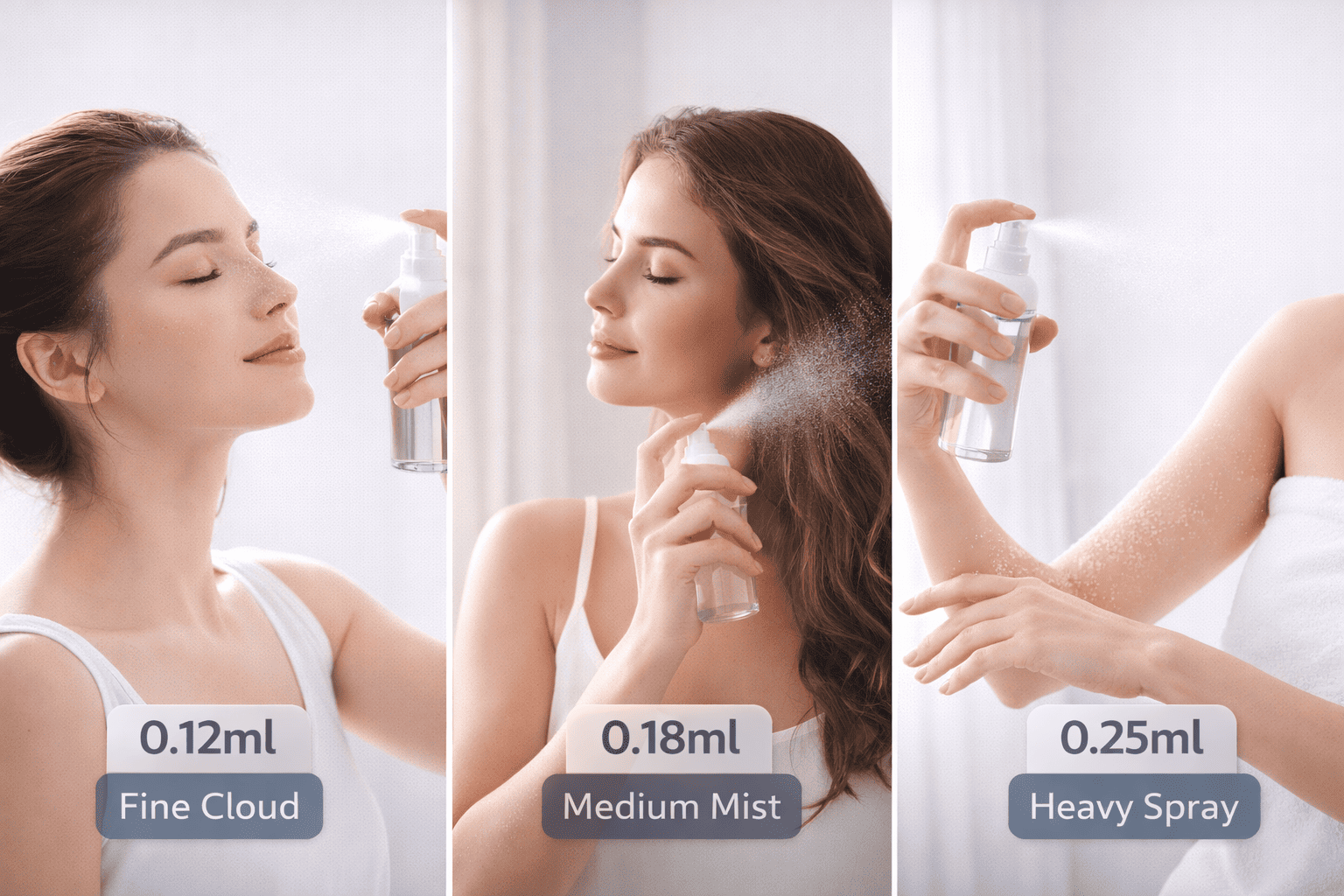
Choosing the right spray output is about thinking from your customer's perspective. What are they using the product for? Let's consider the key factors that should guide your decision. The first is the Target Area. The skin on the face is sensitive, and makeup can be delicate. A low-output, fine mist is gentle and won't disrupt anything. Hair and body are much larger surface areas that can handle a more generous application. The second factor is the Product's Purpose. Is it a setting spray that needs to be barely felt, or a leave-in conditioner that needs to saturate the hair? The third is the Desired Sensation. Do you want your brand to be associated with a luxurious, cloud-like feeling, or a quick, efficient, drenching application? Answering these questions will point you directly to the correct output.
Which products are best for each spray output?
You understand the theory, but you need concrete examples. You want to know what other brands are doing and what the industry standard is for products similar to yours.
Use 0.12ml for facial mists, setting sprays, and toners. Use 0.18ml for hair detanglers and light body sprays. Opt for 0.25ml for products that need heavy coverage, like spray-on sunscreens or leave-in conditioners.
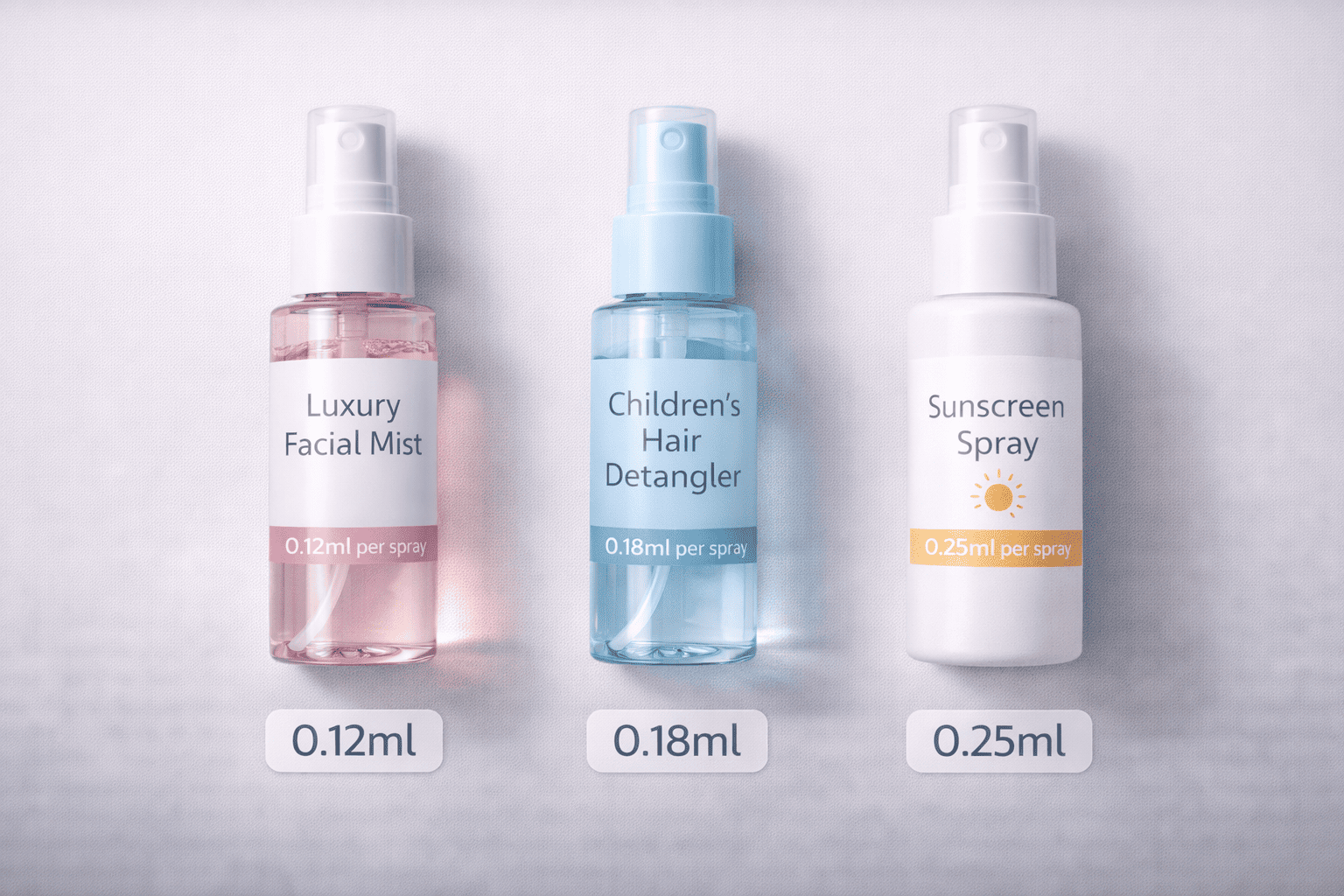
Seeing real-world applications makes the choice much easier. Here is a practical guide that we use to help our clients match the right sprayer to their product. This is a great starting point for making your decision.
| Spray Output | Sensation | Common Products | Why it Works |
|---|---|---|---|
| 0.12ml | Fine, cloud-like mist. Dries quickly, feels gentle. | Facial Mists, Makeup Setting Sprays, Delicate Toners, Aftershaves. | Provides a light, even layer without feeling wet. Perfect for application over makeup or on sensitive facial skin. |
| 0.18ml | Medium spritz. Good coverage, still relatively fine. | Hair Detanglers, Light Body Sprays, Deodorant Sprays, Room Sprays. | This is a great all-rounder. It delivers enough product to be effective on hair or body without being overly drenching. |
| 0.25ml | Wet, substantial spray. Delivers a lot of product quickly. | Leave-in Conditioners, Spray-on Sunscreens, Stain Removers, Cleaning Products. | When the goal is to quickly saturate a surface area, this output is the most efficient and effective choice. |
By looking at this chart, you can easily find where your product fits and select a spray output that will give your customers the best possible experience.
Conclusion
The spray output is a small detail that defines your product's feel. Choosing between 0.12ml, 0.18ml, or 0.25ml is about matching the mist to the mission, ensuring a perfect application every time.
Written by

Mike Lee
You may also be interested in:

Why Is Sunscreen Packaging More Challenging Than Skincare Packaging?
You have a great serum in a beautiful bottle and a moisturizer in a premium

How Can You Prevent the Top 5 Sunscreen Packaging Failures?
Your sunscreen launch is at risk from hidden packaging flaws. These issues often appear post-launch,
How Do You Choose the Right Spray Output (0.12/0.18/0.25ml) for Your Product?
You're looking at supplier options and see a list of numbers: 0.12ml, 0.18ml, 0.25ml. You
What's the Best 50ml Fine Mist Spray Bottle for a Facial Mist?
Your facial mist formula is perfect, but the wrong spray bottle can deliver a harsh,
