
Should You Switch to PCR Plastic for Your Sunscreen Packaging?
March 26, 2026 • Mike Lee
Your customers are demanding sustainable options, but you're worried that switching to recycled materials will compromise your sunscreen's quality or aesthetics. This decision feels like a gamble with your brand's hard-earned reputation.
Yes, Post-Consumer Recycled (PCR) plastic is a major part of the future. To succeed, you must strategically balance its powerful environmental benefits against its real-world limitations in color consistency, supply, and cost before committing to production.
I have these conversations every day. Just last month, I was on a call with Shubihika, a procurement director for a big beauty brand in India. She told me, "Our Gen Z customers are flooding our DMs asking about recycled packaging. We want to do it, but I'm terrified. What's the catch? Will it leak? Will it look cheap? Will I even be able to get it for our next production run?" Her questions were spot on. She knew that for a product as sensitive as sunscreen, you can't just chase a trend. You need a plan. PCR is a fantastic material, but using it successfully means understanding both its bright promise and its hidden challenges.
How Can PCR Actually Help Your Brand?
You see "eco-friendly" on competitors' packaging and feel the pressure to keep up. But you need to justify the switch with real, tangible benefits, not just marketing buzzwords.
PCR plastic delivers measurable environmental wins. It drastically cuts energy use and emissions, keeps plastic waste out of our oceans, and helps you meet tightening government regulations, all while attracting your most conscious consumers.
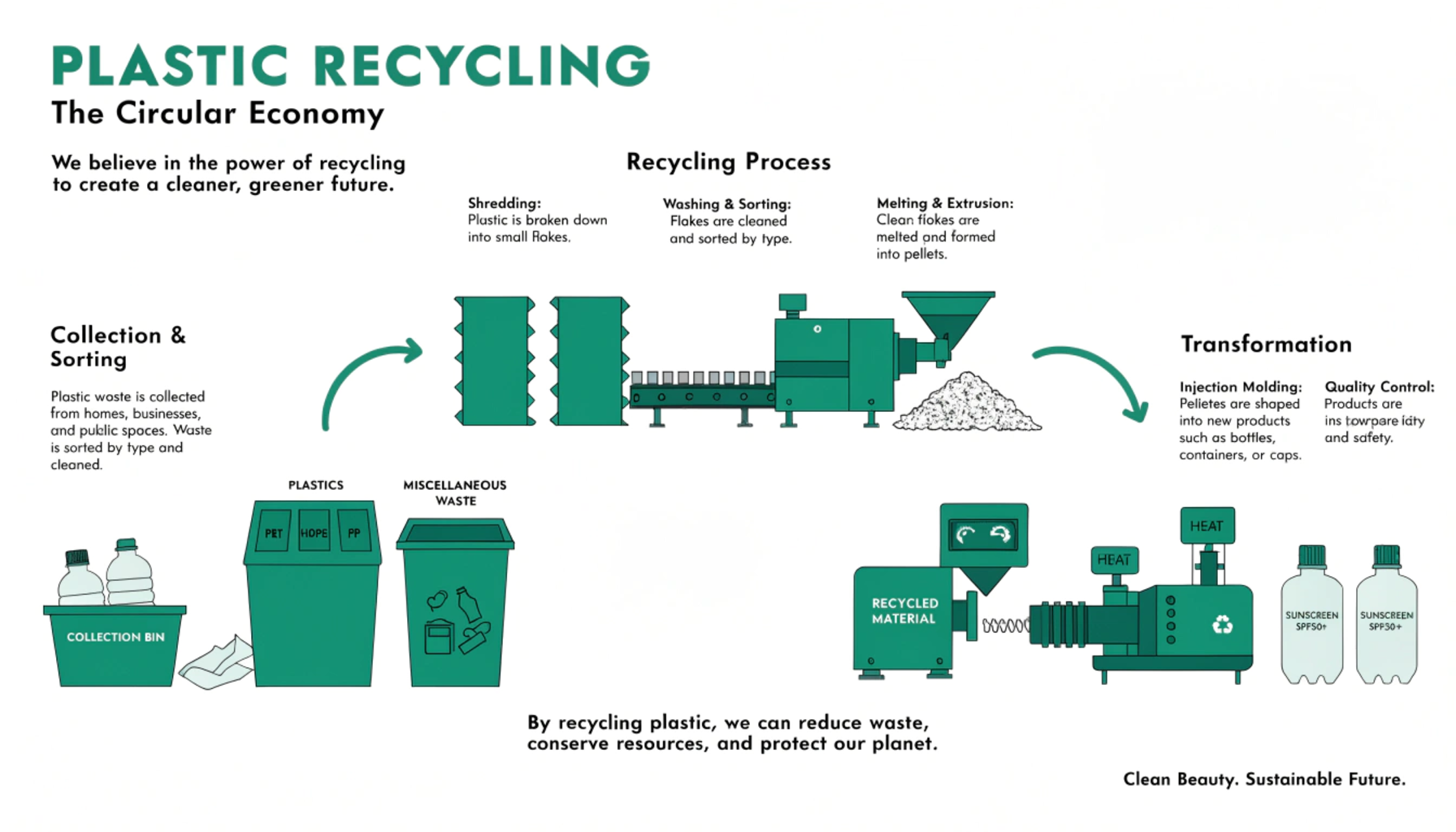
The benefits go far beyond just having a green logo on your tube. The biggest impact is environmental. Producing virgin plastic is an energy-intensive process that relies on fossil fuels. Switching to recycled PET (rPET), for example, can cut greenhouse gas emissions by over 70%. That is a massive, measurable difference your marketing team can talk about. Second, you are actively creating a market for plastic waste. This helps prevent it from ending up in landfills or, even worse, the ocean—a place your sunscreen customers deeply care about. From a technical standpoint, modern PCR is not a compromise on safety. We ensure it provides the same structural strength and barrier protection as virgin plastic, which is critical for keeping an unstable sunscreen formula safe from leaks and degradation. Finally, it's a smart business move. Governments in places like California and across the European Union are mandating recycled content. Using PCR now puts you ahead of the curve, not behind it.
Key Benefits of Using PCR
| Benefit | Impact for Your Brand |
|---|---|
| Environmental Reduction | Lowers your carbon footprint and provides a real sustainability story. |
| Waste Diversion | Aligns with ocean-friendly brand values and consumer concerns. |
| Structural Integrity | Guarantees product safety and performance, protecting your reputation. |
| Regulatory Compliance | Future-proofs your business against upcoming environmental laws. |
What Are the Hidden Challenges of PCR Packaging?
You're sold on the benefits of PCR, but you have a nagging fear that it's too good to be true. You're worried about unexpected costs, supply disruptions, or a final product that doesn't match your brand's premium image.
The main challenges are aesthetic variations, supply chain inconsistency, and higher costs. The plastic often has a slight tint, high-quality supply is scarce, and the intensive sorting and cleaning process makes it more expensive than new plastic.
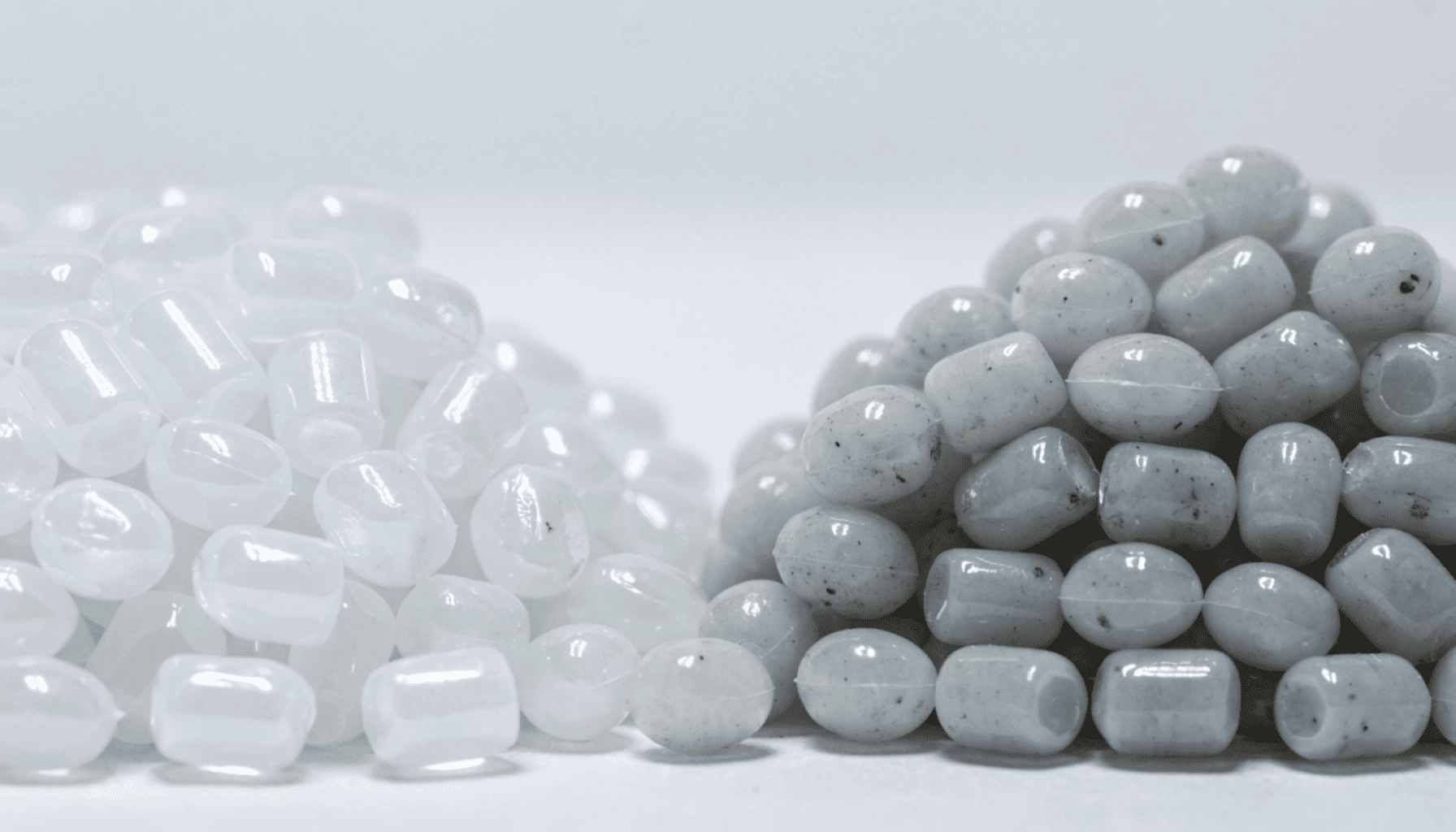
These are the practical truths we must discuss with every client. First, let's talk aesthetics. Because PCR comes from a mix of recycled products, it is almost never perfectly clear or pure white. It often has a slight gray or yellow tint, and you might see tiny, dark specks in the material. For a luxury brand used to a pristine white tube, this can be a shock. Second, the supply chain is tight. The demand for high-quality, food-grade PCR is exploding, but the supply hasn't caught up. This can lead to longer lead times and sourcing challenges if you don't have a reliable partner. Finally, it costs more. The logistics of collecting consumer waste, the energy needed for sorting and deep cleaning, and the yield loss during processing all add up. This makes safe, reliable PCR more expensive than simply producing new plastic. There's also a technical limit: plastic can't be recycled forever. After 7-9 cycles, the polymer chains degrade.
How Can You Use PCR Without Risking Your Brand?
You understand the pros and cons, but you need a practical strategy. How do you actually implement PCR packaging for a product as sensitive as sunscreen without making a costly mistake?
The key is strategic implementation. Start with a blend, embrace color to manage aesthetics, secure your supply chain with a reliable partner, and be transparent with your customers about the journey. This turns challenges into brand strengths.
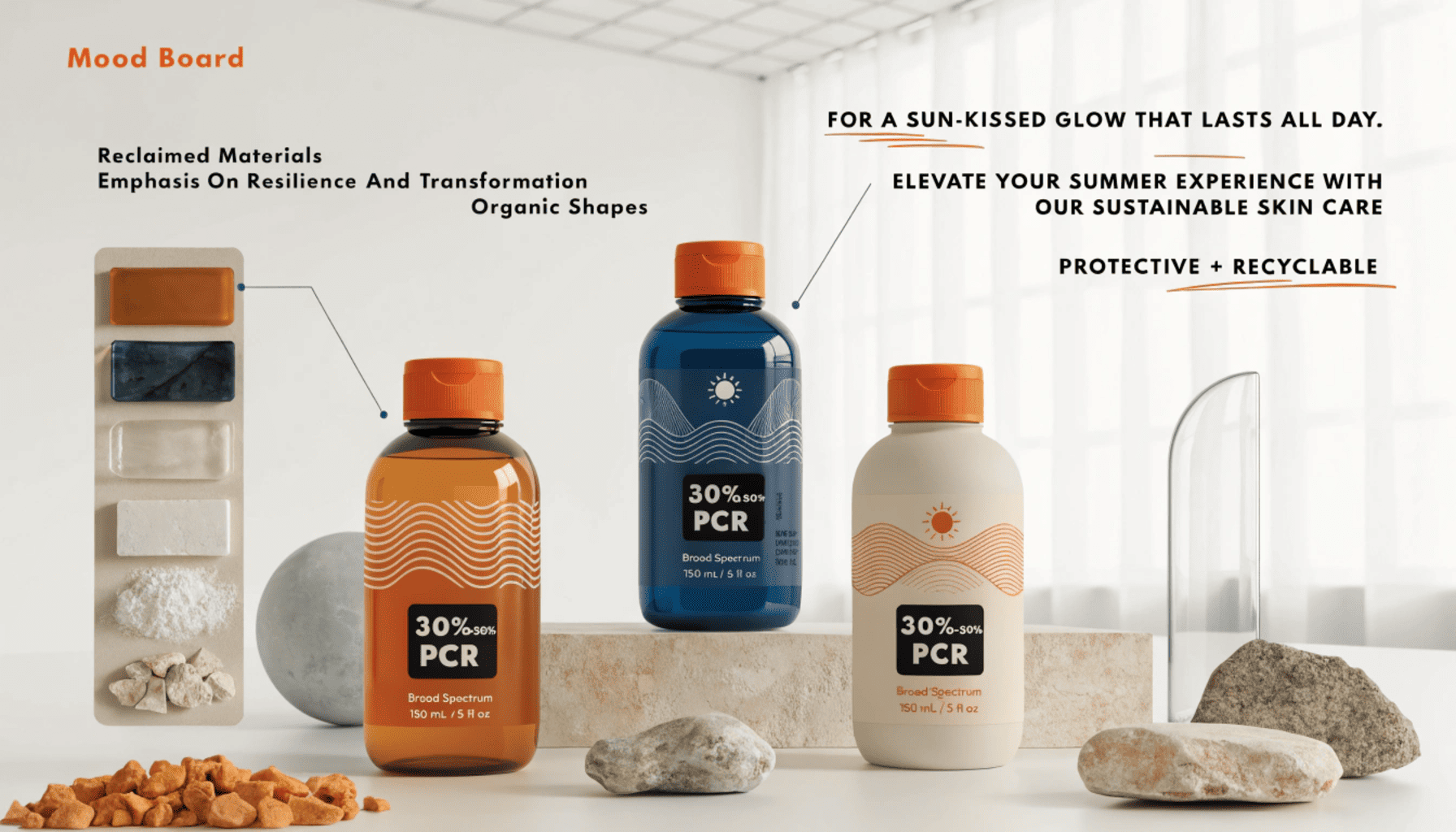
This is where planning transforms risk into opportunity. Don't jump to 100% PCR on a pure white bottle right away. I always suggest starting with a 30% or 50% PCR blend. This gives you a significant sustainability claim while minimizing aesthetic impact. We can then test the color masterbatch to see how it performs with the PCR base resin. Often, choosing an opaque color like a deep blue, a rich amber, or even a solid black completely masks any minor imperfections in the PCR material, giving you a premium look. Securing a stable supply is my job. As a manufacturer, we work with certified PCR suppliers and forecast demand to ensure we have the material ready for your production schedule. Finally, tell the story. Be honest with your customers. A label that says "This tube is made with 50% recycled plastic to help protect our oceans" is incredibly powerful. It shows you're making a real effort and turns the tiny specks into proof of sustainability.
Conclusion
PCR plastic offers powerful benefits but requires careful planning around aesthetics, cost, and supply. Partnering with a manufacturer who understands these trade-offs is key to a successful, sustainable launch.
Written by

Mike Lee
You may also be interested in:

How Do You Choose the Right Sunscreen Bottle Packaging for Your Brand in 2025?
You have a fantastic new sunscreen formula, but now you're stuck. With so many tubes,

How Can Brands Go Green With Sunscreen Packaging Without Sacrificing Style?
You want to make your sunscreen packaging more eco-friendly, but you're worried. You see "green"

What Are the Top 5 Sunscreen Bottle Trends Shaping the Cosmetic Packaging Industry in 2025?
You're planning your 2025 product line and see competitors using everything from sticks to sprays.
Lightweight, Leak-Proof, and Travel-Friendly: Why Is This the Future of Sunscreen Packaging?
You have a fantastic sunscreen, but your customers complain that the bottle is too heavy,
