
How Can Smart Packaging Choices Reduce Your Carbon Footprint?
November 13, 2025 • Mike Lee
You're committed to making your brand more environmentally friendly, but the term "carbon footprint" feels huge and abstract. You want to take action, but you don't know where to start.
Smart packaging reduces your carbon footprint by making targeted choices to use less energy and create less waste. This involves selecting low-impact materials, optimizing designs to be smaller and lighter, and creating reusable or refillable systems.

Your insights about materials, size, and reusability are the exact pillars of a smart carbon reduction strategy. I once worked with a brand that had a beautiful, but very heavy, glass jar with a complex multi-part cap. Their carbon footprint was significant, mostly from the energy to produce the heavy glass and transport it. They thought a redesign would be a massive, expensive project. We showed them a simpler path. We switched them to a lightweighted rPET jar that had the same premium feel, but was 60% lighter. We also designed a simple, mono-material cap. These two small changes dramatically cut their carbon emissions from production and shipping, and the brand was celebrated by their customers for the move.
How does sustainable packaging actually reduce your carbon footprint?
You hear the claim "sustainable packaging reduces carbon footprint" constantly, but it often feels like a vague marketing slogan. You want to understand the real, tangible mechanisms behind the statement.
Sustainable packaging cuts your carbon footprint in three main ways: it requires less energy for material production, it lowers transportation emissions through lighter designs, and it minimizes waste and energy use at its end-of-life.
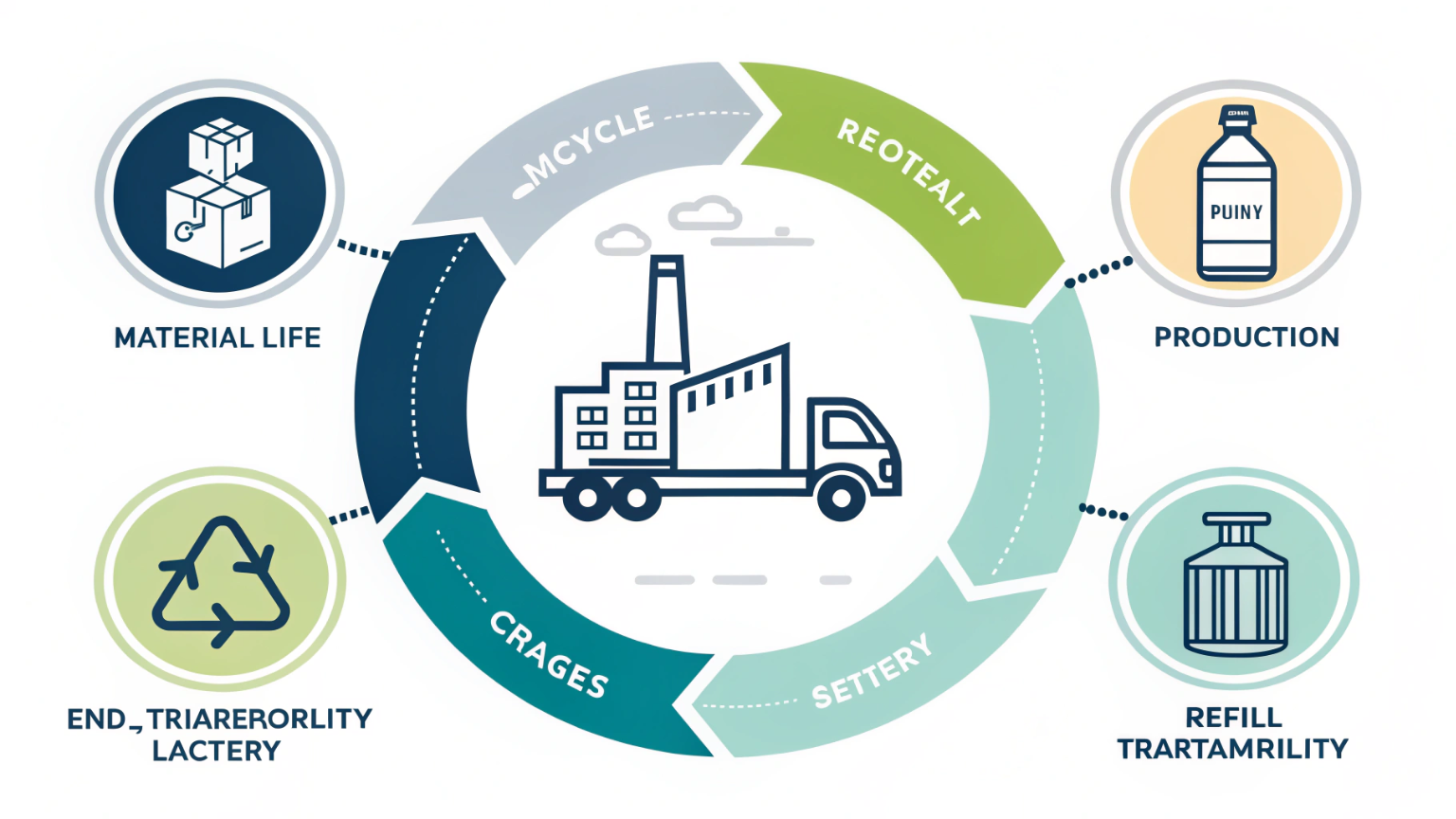
Reducing your carbon footprint is all about reducing energy consumption at every stage of your packaging's life. It's a chain reaction where one smart choice leads to savings down the line.
| Stage of Lifecycle | How Carbon Footprint is Reduced |
|---|---|
| 1. Material Production | This is the biggest factor. Creating virgin plastic or new glass is energy-intensive. Choosing recycled materials like rPET uses up to 75% less energy. Choosing renewable materials like bioplastics can also lower the carbon impact compared to fossil fuel-based plastics. |
| 2. Transportation | A lighter, smaller package requires less fuel to transport. This applies to every step: from our factory to your warehouse, and from your warehouse to the customer. This design choice, known as lightweighting, directly cuts transport emissions. |
| 3. End-of-Life | A package that's easily recycled or, even better, designed to be refilled, prevents the energy waste of landfilling and reduces the need to produce a brand-new package for the next purchase. This creates a circular system that is far less carbon-intensive. |
By focusing on these three areas, your "sustainable" choices have a direct and measurable impact on your brand's total carbon emissions.
What are the 7 R's of sustainable packaging?
You probably know "Reduce, Reuse, Recycle," but you keep hearing about a more extensive framework. You're wondering what the other "R's" are and how they apply to your packaging.
The 7 R's of sustainable packaging (Rethink, Refuse, Reduce, Reuse, Repair, Repurpose, Recycle) provide a complete strategic checklist to guide your decisions, moving from high-level strategy to end-of-life management.
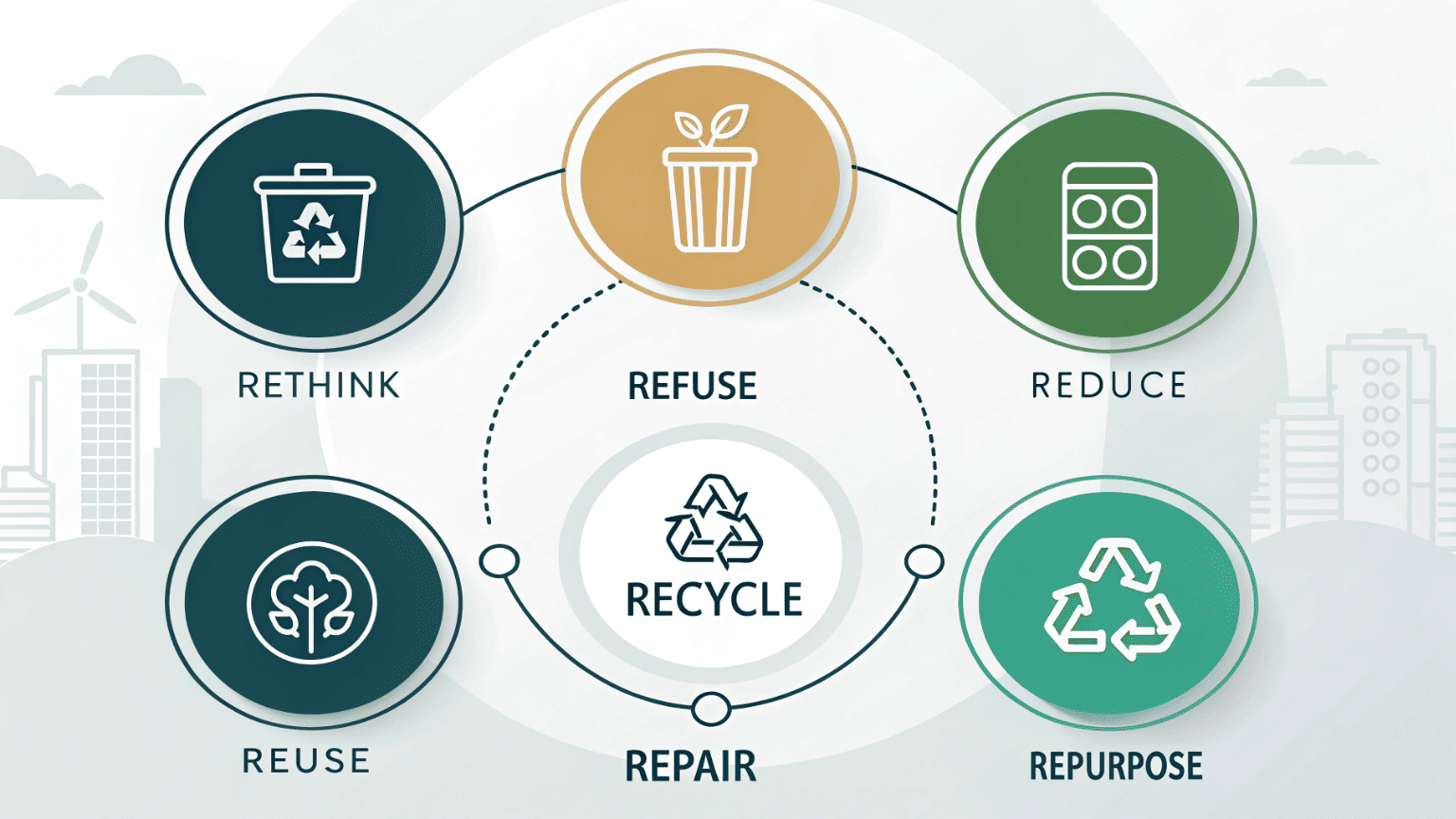
This framework helps you think more holistically about sustainability. It pushes you to question every decision and find the most impactful opportunities to reduce your environmental and carbon footprint.
| The 7 R's | Application in Cosmetic Packaging |
|---|---|
| Rethink | Rethink the entire system. Does this product need a box? Can we offer a solid, package-free version? |
| Refuse | Refuse unnecessary components. Do you need the plastic shrink wrap, the inner leaflet, or the extra layer of cardboard? |
| Reduce | Reduce the amount of material used. Lightweight the bottle, make the walls thinner, and minimize the overall size. |
| Reuse | Design for reuse. Create a durable outer container and sell simple, low-packaging refills. |
| Repair | Less common for cosmetics, but can apply to high-end devices or applicators where a part could be replaced. |
| Repurpose | Can the beautiful jar be repurposed by the customer to hold jewelry or cotton swabs after it's empty? |
| Recycle | Ensure the packaging is made from a single, widely recycled material like PET or PP to make recycling easy for the consumer. |
What are 5 practical ways you can reduce your carbon footprint?
You understand the theory, but you need a simple, actionable list of things you can do right now to start reducing your brand's carbon footprint. You want immediate and impactful steps.
You can immediately reduce your carbon footprint by 1) switching to recycled materials like rPET, 2) lightweighting your packaging, 3) implementing a refill system, 4) consolidating your suppliers, and 5) optimizing your shipping logistics.
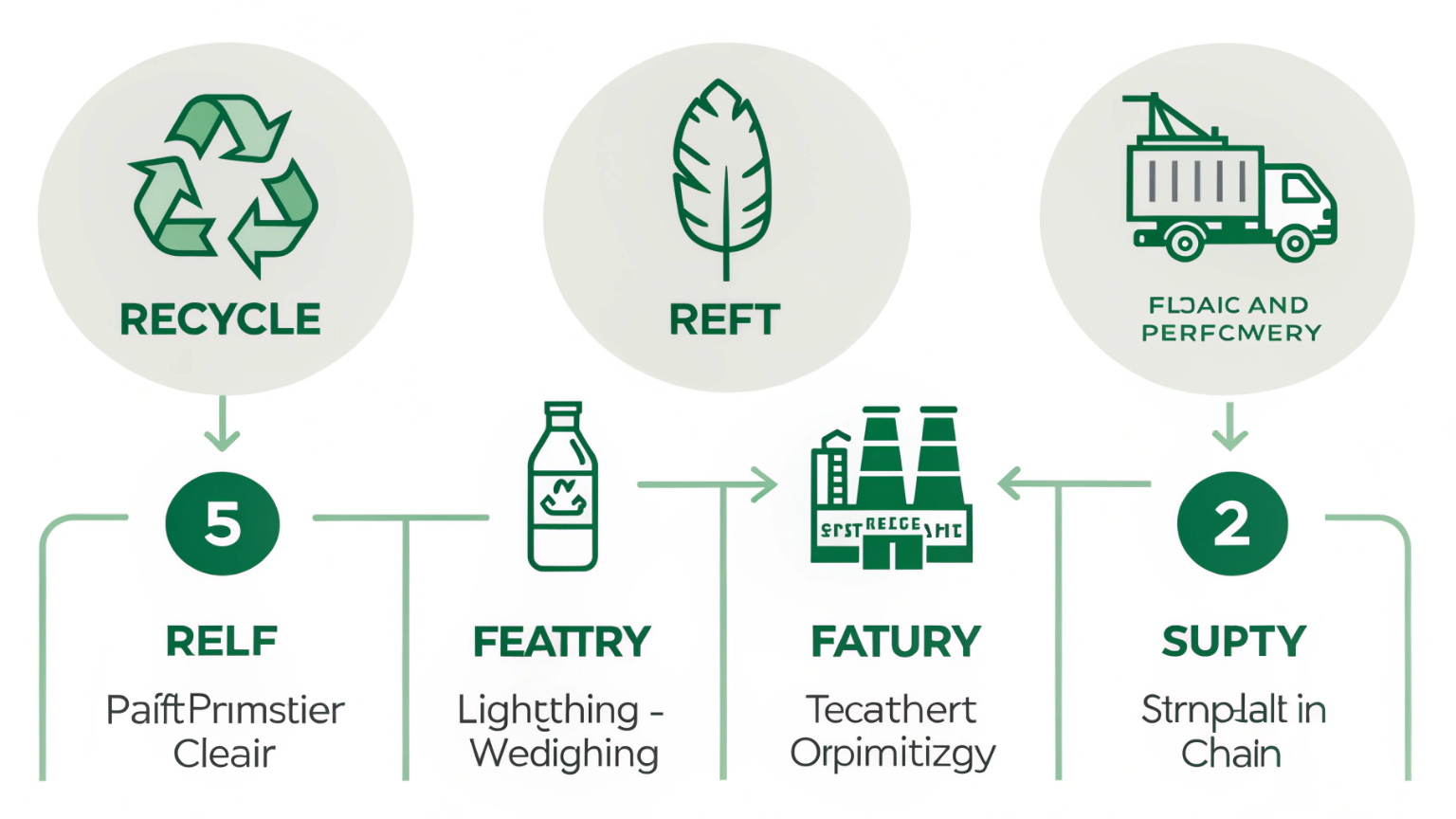
Reducing your carbon footprint doesn't have to be a complete overhaul. It can be a series of smart, incremental changes that add up to a big impact.
5 High-Impact Steps to Take Now:
- Switch to rPET: Immediately cut the carbon footprint of your material production by over 50% by switching from virgin PET to recycled PET (rPET).
- Lightweight Your Design: Ask your supplier, "How can we make this 10% lighter?" This simple change reduces material and shipping emissions.
- Launch a Refill Program: Start with one hero product. Design a beautiful "forever" bottle and a simple, low-cost refill pouch or bottle. This is one of the most effective long-term strategies.
- Consolidate Your Supply Chain: Sourcing your bottle, cap, and box from one reliable supplier (especially one with an integrated supply chain like in China) reduces the number of shipments and the associated emissions.
- Optimize Shipping: Choose sea freight over air freight whenever possible. Sea freight has a dramatically lower carbon footprint. Plan your production schedule to allow for the longer lead times.
Conclusion
Reducing your carbon footprint is not an abstract goal. It is the result of smart, practical choices in materials, design, and logistics that also lead to a more efficient and resilient business.
Written by

Mike Lee
You may also be interested in:

Is Your Eco-Friendly Sunscreen Packaging Actually Green, or Just Greenwashing?
Your brand wants sustainable sunscreen packaging. But using unverified eco-materials can lead to leaks and
How Is rPET Revolutionizing the Cosmetic Packaging Industry?
You want to make your packaging more sustainable, but you're worried about sacrificing quality. You

How Do You Create a Truly Sustainable Cosmetic Packaging Strategy?
You feel the pressure to make your packaging sustainable, but every choice seems complex. Switching

Is PLA the Future of Sustainable Beauty Packaging?
You're seeing "plant-based plastic" and "compostable" everywhere. You're intrigued by PLA as a way to
